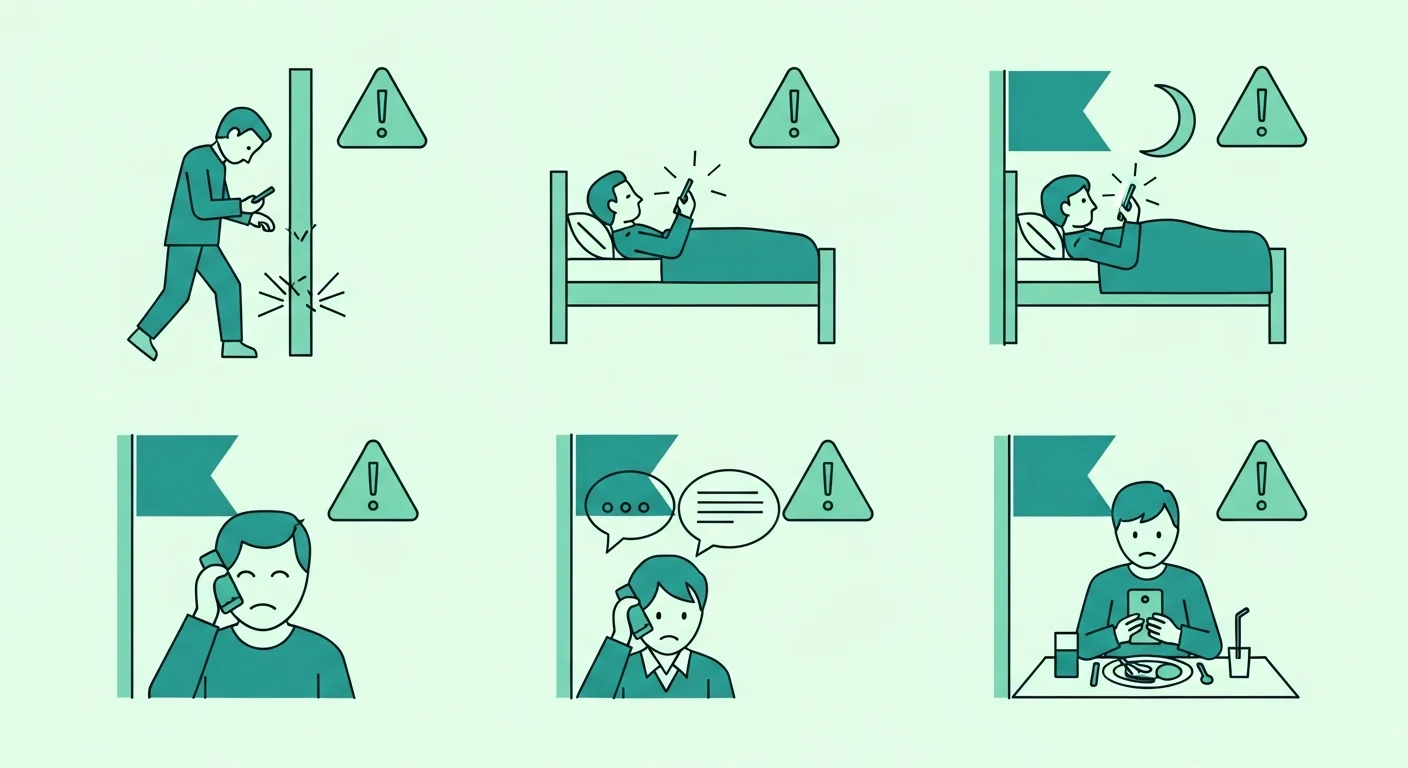
I was standing in line at the grocery store last week when I watched a woman nearly walk into a display of canned soup because she couldn't look up from her phone. We all laughed it off, including her, but here's what bothered me: she went right back to scrolling. No pause, no moment of "maybe I should put this away." Just straight back into the screen. That moment crystallized something I'd been noticing everywhere, we've normalized behavior that, in any other context, we'd recognize as problematic.
So let's talk about the warning signs of Phone Overuse. Not to shame anyone or preach about the dangers of technology, but because recognizing these patterns is the first step toward doing something about them. And trust me, once you know what to look for, you'll see these signs everywhere, in your friends, your family, and probably in yourself.
What Are the Early Indicators of Smartphone Dependency?
The tricky thing about Smartphone Dependency is that it doesn't announce itself with a dramatic moment. There's no rock bottom where you wake up and realize you've lost everything to your phone. Instead, it creeps in through small behavioral shifts that seem harmless at first. You check your phone a little more often. You feel slightly anxious when the battery drops below 20%. You tell yourself you'll just scroll for five minutes, and suddenly it's been an hour. These early indicators of smartphone dependency are easy to dismiss because they feel so normal in our current culture. Everyone's doing it, right? But just because something is common doesn't mean it's healthy.
One of the earliest warning signs is what I call "phantom vibration syndrome," though it's got more clinical names in the research literature. You feel your phone vibrate in your pocket, reach for it immediately, and discover there's no notification at all. Your brain has become so primed to expect those little dopamine hits that it starts manufacturing them. If this happens to you multiple times a day, that's your nervous system telling you it's been trained to anticipate smartphone rewards constantly. Another early indicator is checking your phone within the first five minutes of waking up, before you've even gotten out of bed. When your phone becomes the first thing you reach for in the morning, before water, before coffee, before acknowledging the person sleeping next to you, that's a behavioral red flag worth paying attention to.
The anxiety component is crucial here. Do you feel genuinely uncomfortable or anxious when you can't check your phone for an extended period? If you're in a movie theater and your phone is off, are you thinking about what you might be missing? That low-grade anxiety, that constant mental pull toward your device, that's nomophobia, the fear of being without your mobile phone. It sounds dramatic, but the symptoms are real and measurable. Studies show that people experiencing nomophobia have elevated cortisol levels and increased heart rates when separated from their devices, similar to the physiological responses seen in other addictive behaviors.
How Can You Spot If Someone Is Overly Reliant on Their Mobile Device?
Identifying Phone Overuse in others requires looking beyond just screen time numbers. Sure, spending eight hours daily on your phone is concerning, but the real indicators are more behavioral and emotional. Watch how someone responds when asked to put their phone away. Is there resistance? Irritation? Do they agree but then keep "just quickly checking" something every few minutes? That's a sign of mobile dependency that goes beyond casual use.
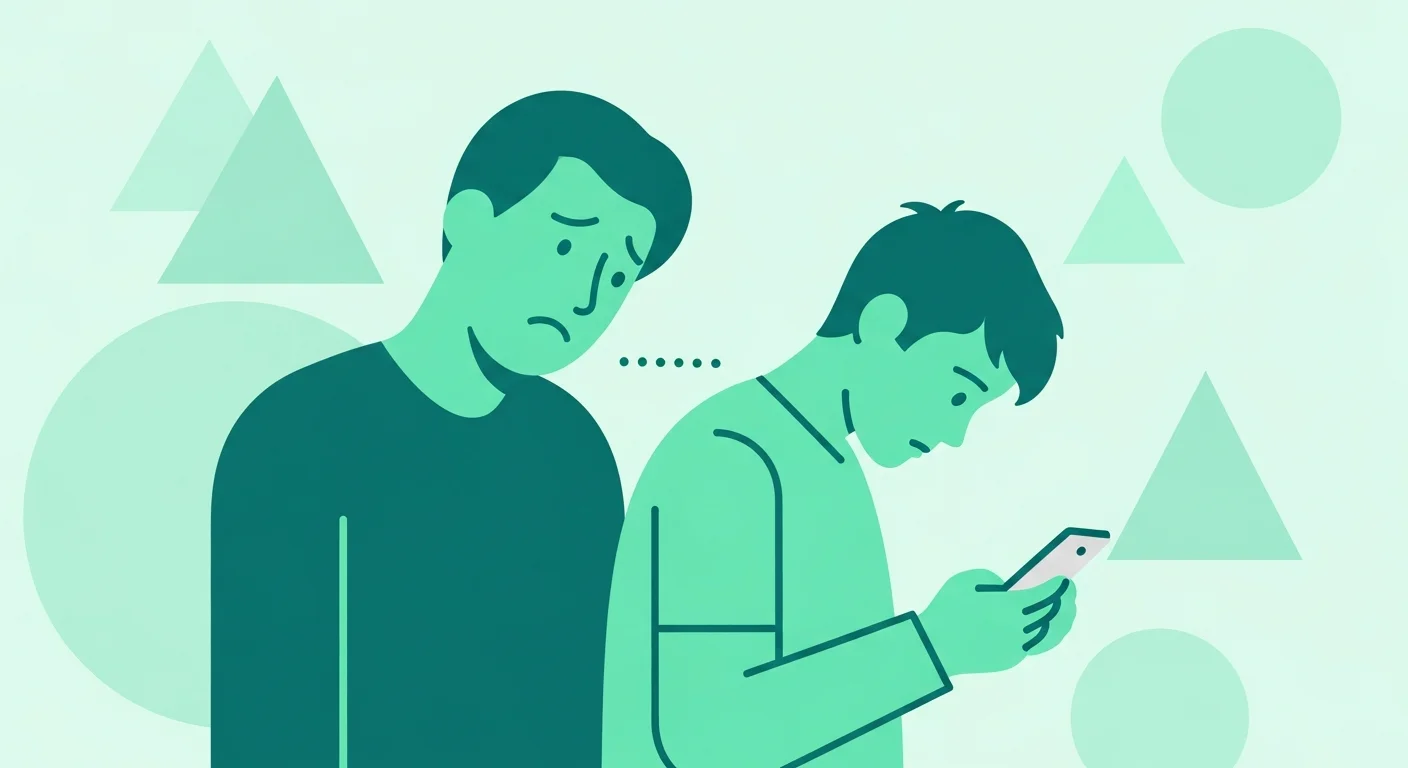
Pay attention to the conversation patterns. Does the person constantly interrupt discussions to check their phone or share something they just saw online? Do they struggle to maintain eye contact during conversations because their gaze keeps drifting to their device? I have a friend who literally cannot sit through a meal without checking her phone at least a dozen times. Not because she's expecting important calls, but because the pull is too strong to resist. When I gently mentioned it once, she got defensive immediately, which is itself another warning sign. People who have a healthy relationship with their phones don't get emotionally reactive when someone points out their usage patterns.
In teens, the signs of excessive phone usage often manifest as social withdrawal paradoxically paired with constant online presence. A teenager might spend hours in their room "connecting" with friends online while avoiding actual face-to-face interaction with family members in the next room. Their mood might shift dramatically based on social media interactions, receiving likes and comments becomes disproportionately important to their emotional state. Sleep disruption is another major red flag for smartphone overuse in adolescents. If a teen is exhausted during the day but stays up until 2 AM scrolling through TikTok or texting friends, that's Screen Dependency interfering with basic health needs.
For adults, detecting Phone Overuse often involves noticing how the device has infiltrated every aspect of life. Do they use their phone while driving, despite knowing the dangers? Is the phone present during intimate moments with a partner? Do they feel compelled to document experiences on social media rather than simply experiencing them? Adults with smartphone dependency often rationalize their behavior more effectively than teens, convincing themselves that constant connectivity is a professional necessity when it's actually a compulsion.
Which Behaviors Signal a Potential Phone Use Disorder?
Let me be straight with you about the behavioral red flags for smartphone overuse, because some of these are going to hit close to home. One of the clearest indicators is using your phone as an emotional crutch. Feeling bored? Grab the phone. Feeling anxious? Grab the phone. Feeling awkward in a social situation? Grab the phone. When your device becomes your primary coping mechanism for any uncomfortable emotion, that's addiction territory. You're not using the phone as a tool anymore; you're using it as a psychological escape hatch, and that pattern reinforces itself every time you reach for the device instead of dealing with the actual feeling.
Another significant warning sign is the inability to complete tasks without phone interruption. You sit down to work on something that requires focus, and within minutes, you're checking your phone. You start watching a movie, and you're simultaneously scrolling through Instagram. You're having a conversation, but you're also texting someone else. This constant task-switching isn't multitasking, it's fractured attention, and it's a hallmark of digital addiction. Your brain has lost the ability to sustain focus on a single activity without seeking the variety and stimulation that your phone provides.
The "just one more" phenomenon is particularly insidious. You tell yourself you'll just check one more notification, watch one more video, scroll through one more page. But there's always another notification, another video, another page. This is by design, social media platforms and app developers engineer infinite scroll and autoplay features specifically to keep you engaged. But when you repeatedly promise yourself you'll stop in five minutes and then don't, when you consistently underestimate how long you've been on your phone, that's a loss of self-control that characterizes addictive behavior.
What Signs Show That Phone Habits Are Becoming Addictive?
Here's where we need to talk about the addiction symptoms that cross the line from "probably uses their phone too much" to "this is genuinely problematic." Withdrawal symptoms are real with Smartphone Dependency. When you're separated from your phone involuntarily, maybe it died or you left it at home, do you experience genuine distress? Irritability, anxiety, difficulty concentrating on anything else? That's your brain chemically dependent on the dopamine hits your phone provides. The severity of your emotional response to being without your phone is directly proportional to the depth of your dependency.
Tolerance is another classic addiction marker. You need increasing amounts of phone time to feel satisfied. What used to be ten minutes of scrolling before bed has gradually become an hour, then two hours. The content that used to entertain you for a while now bores you quickly, so you're constantly seeking newer, more stimulating content. Your baseline for what feels like "enough" stimulation has been steadily rising, and normal, everyday activities without a screen now feel unbearably dull by comparison.
Neglecting responsibilities and relationships is perhaps the most serious warning sign. When phone use starts interfering with work performance, academic achievement, or personal relationships, and you continue the behavior despite knowing these consequences, that's classic addictive behavior. I know someone who got written up at work three times for excessive phone use during shifts. Each time, he genuinely intended to stop, and each time, he couldn't sustain the change. That's not a willpower issue, that's addiction overriding logical decision-making.
How Do You Recognize When Screen Time Is Harming Your Daily Life?
The impact of Screen Dependency extends into every corner of your life, often in ways you don't immediately connect to your phone use. Physical symptoms are surprisingly common. Are you experiencing more headaches, eye strain, or neck pain? That forward head posture from constantly looking down at your phone, what doctors now call "text neck," can cause chronic pain and even long-term skeletal issues. Are your sleep patterns disrupted? The blue light from screens interferes with melatonin production, but beyond that, the cognitive stimulation of social media and messages keeps your brain activated when it should be winding down for sleep.
Mental health impacts are equally significant. There's substantial research linking excessive smartphone use to increased rates of anxiety and depression, particularly among young people. But you don't need a clinical study to notice this in yourself. Do you feel worse after extended phone sessions? Does scrolling through social media leave you feeling inadequate, anxious, or hollow? That's screen time harming your psychological wellbeing. The comparison trap of social media, the anxiety of keeping up with messages and notifications, the FOMO (fear of missing out) that drives compulsive checking, these all take a measurable toll on mental health.
Consider the opportunity cost. What are you not doing because you're on your phone? Are you reading less? Exercising less? Spending less quality time with loved ones? Pursuing hobbies you used to enjoy? When your phone displaces activities that used to bring you genuine satisfaction and fulfillment, that's a clear sign the balance has shifted too far. The insidious thing about Smartphone Dependency is that it doesn't feel like you're missing out on anything in the moment. Scrolling feels productive, feels like you're staying connected and informed. It's only in retrospect that you realize you've traded hours of potential meaningful activity for the digital equivalent of empty calories.
Taking the First Step
Recognizing these warning signs in yourself doesn't make you weak or flawed. It makes you human, living in a world where every app, every platform, every notification is designed by teams of engineers and psychologists whose job is to capture and hold your attention. The deck is stacked against you, and acknowledging that you might be losing this battle is actually the strongest thing you can do.
So here's what I want you to do: spend the next 24 hours just noticing. Don't try to change anything yet. Just observe your own behavior with your phone. Count how many times you check it. Notice what triggers the urge to reach for it. Pay attention to how you feel before, during, and after phone sessions. Awareness is the prerequisite for change, and you can't address a problem you won't acknowledge exists.
The warning signs are there. The question is whether you're ready to see them.
Ready to assess your smartphone dependency? Use our Digital Wellness Calculator to get your personalized screen time score and start your journey toward better digital wellness.
Note: This article is for informational purposes only and should not be considered medical advice. If you have serious concerns about technology addiction or mental health, please consult with a qualified healthcare provider.