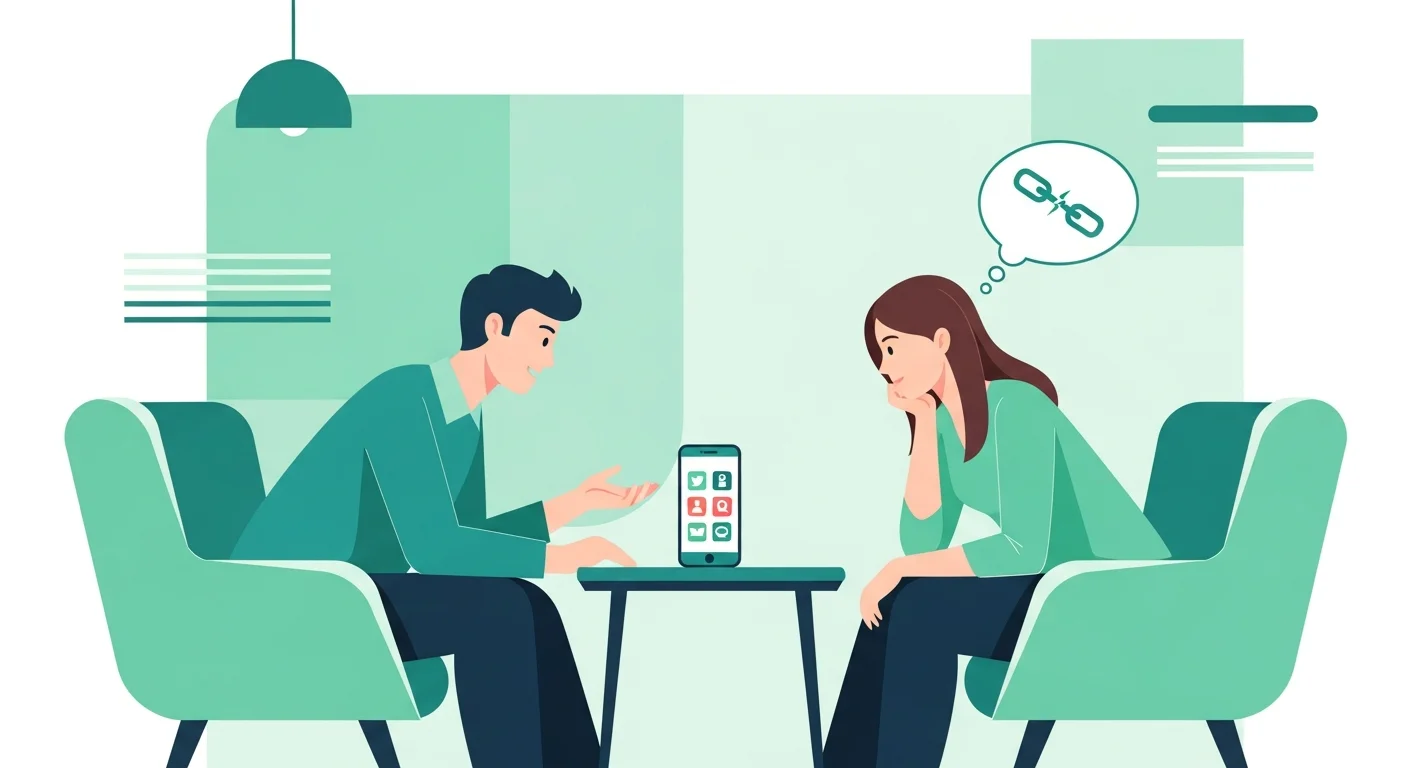
Let me tell you about the moment I realized I might need actual professional help for my phone problem. I was at my nephew's birthday party, sitting at a table full of laughing family members, and I had absolutely no idea what they were laughing about because I'd been scrolling through Twitter for the past fifteen minutes. My sister gently took my phone out of my hands and said, "Maybe you should talk to someone about this." I laughed it off. But that night, alone with my thoughts and my glowing screen, her words kept echoing. Maybe I should talk to someone about this.
Here's something most people don't want to admit: sometimes self-help articles, apps, and good intentions aren't enough. Sometimes the relationship with your phone has gotten so tangled, so deeply wired into your daily functioning and emotional regulation, that you need professional help to untangle it. And that's not a failure. That's just being honest about the severity of the problem. Phone Overuse therapy isn't some dramatic overreaction reserved for extreme cases. It's a legitimate form of Smartphone Dependency treatment that helps people who've tried everything else and still find themselves trapped in patterns they can't break alone.
Is professional therapy necessary for treating Smartphone Dependency? Not always, but more often than you'd think. And knowing when to seek therapy for phone use, what to expect from technology addiction counseling, and how to find the right help can make the difference between years of struggling and actually reclaiming control of your life.
Recognizing When You Need Professional Help for Smartphone Overuse
Before we dive into what Phone Overuse therapy looks like, let's address the elephant in the room: how do you know if you actually need it? Because there's a massive difference between "I use my phone too much and should probably cut back" and "my phone use is genuinely interfering with my ability to function and I can't stop despite negative consequences."
What are the signs that Phone Overuse requires professional help? Mental health professionals look for several key indicators when determining if someone's phone use has crossed into territory requiring intervention. If your phone use is causing serious problems in your relationships, like partners threatening to leave or friends expressing genuine concern repeatedly, that's a red flag. If you're experiencing significant work or academic consequences, missing deadlines, getting reprimanded, or your performance is noticeably suffering because you can't stay off your device, that's another major sign. Physical symptoms matter too: disrupted sleep patterns, eye strain, neck problems, and ignoring basic needs like eating or hygiene because you're absorbed in your phone all indicate a level of dependency that might need professional attention.
The emotional component is equally important and often overlooked. If you experience genuine anxiety, panic, or anger when separated from your phone or when limits are imposed, that's withdrawal, and withdrawal suggests addiction has taken root deeper than surface-level habits. If you've tried multiple times to reduce your usage using apps, accountability partners, or self-imposed rules, and you consistently fail or relapse within days, that pattern of repeated unsuccessful attempts is actually one of the diagnostic criteria for behavioral addictions. At that point, you're not lacking willpower. You're facing a problem that requires professional intervention.
Understanding Different Types of Technology Addiction Counseling
What type of therapist specializes in phone and technology addiction? Finding a therapist for technology addiction can feel tricky because this is still a relatively new specialization in the mental health field. You're looking for professionals who typically identify as addiction specialists or behavioral health counselors with specific experience in process addictions or behavioral addictions, which is the category that includes phone and internet dependency alongside things like gambling addiction or shopping addiction.
Many therapists who work with substance abuse have expanded their practice to include technology-related issues because the underlying psychological mechanisms are remarkably similar. Licensed clinical psychologists, licensed professional counselors, and licensed clinical social workers can all provide effective Smartphone Dependency treatment if they have the right training and approach. When you're researching potential therapists, don't be shy about asking directly about their experience treating technology addiction. A good therapist won't be offended. They'll appreciate that you're being thoughtful about finding the right fit.
How does cognitive behavioral therapy help with phone dependency? CBT, as it's commonly abbreviated, is the gold standard for treating behavioral addictions, and cognitive behavioral therapy for Smartphone Dependency has shown remarkable success rates. The approach is beautifully practical. CBT operates on the principle that our thoughts, feelings, and behaviors are all interconnected, and by identifying and changing problematic thought patterns, we can change the behaviors that follow. In the context of Phone Overuse, a CBT therapist helps you recognize the automatic thoughts that trigger phone use, like "I need to check if anyone messaged me" or "I deserve a break, I'll just look at Instagram for a minute," and examines whether those thoughts are actually rational or if they're just addiction talking.
The behavioral component involves identifying triggers, situations, emotions, or times of day when you're most likely to reach for your phone compulsively, and then developing specific coping strategies for those high-risk moments. You might work on replacing phone checking with alternative behaviors, gradually exposing yourself to being without your device for increasing periods, or using techniques like urge surfing where you ride out the craving to check your phone without acting on it, learning that the urge will pass naturally if you don't reinforce it. CBT is typically a shorter-term therapy, usually ranging from 12 to 20 sessions, which makes it both cost-effective and goal-oriented, two things that matter when you're already feeling overwhelmed.
| Therapy Type | Approach | Best For | Typical Duration |
|---|---|---|---|
| Cognitive Behavioral Therapy | Identifying thought patterns and triggers | Most Phone Overuse cases | 12-20 sessions |
| Acceptance and Commitment Therapy | Mindfulness and value-based action | Those with anxiety components | 8-16 sessions |
| Group Therapy | Peer support and shared experiences | Building accountability | Ongoing/weekly |
| Family Therapy | Addressing relationship impacts | When phone use affects family dynamics | 6-12 sessions |
| Dialectical Behavior Therapy | Emotional regulation skills | Co-occurring mental health issues | 6 months+ |
What Actually Happens During Phone Overuse Therapy Sessions
What happens during a typical therapy session for Smartphone Dependency? Let me walk you through what you can actually expect because the unknown often creates unnecessary anxiety that prevents people from seeking help they genuinely need. Your first session, typically called an intake or assessment, involves a lot of questions. Your therapist wants to understand your phone use patterns in detail: how many hours daily, which apps consume most of your time, what situations trigger excessive use, how long this has been a problem, what you've already tried, and crucially, how your phone use is impacting other areas of your life. They'll also assess for co-occurring issues like depression, anxiety, or social difficulties, because Phone Overuse rarely exists in isolation. Often it's a coping mechanism for underlying issues that also need addressing.
Subsequent sessions follow a structure that varies by therapeutic approach but generally includes reviewing your week, discussing challenges and successes in reducing phone use, working on specific skills or techniques, and setting goals or homework for the coming week. The homework aspect is critical and something people don't always anticipate. Phone dependency treatment isn't passive. You're expected to actively work on changing your behaviors between sessions, tracking your usage, practicing the techniques you're learning, and reporting back on what worked and what didn't. That active participation is actually what makes therapy effective. The therapist provides tools, insight, and accountability, but you're the one doing the actual work of change.
Online Therapy for Phone Dependency: Does It Work?
Can online therapy effectively treat Phone Overuse or is in-person better? This question comes up constantly, and it's complicated by the obvious irony: using technology to treat technology addiction feels counterintuitive. But research actually shows that online therapy for phone dependency can be just as effective as in-person sessions for many people, with some specific caveats worth understanding.
The advantages of virtual therapy are practical and significant. Access matters enormously. If you live in a rural area or somewhere without specialized addiction therapy services nearby, online options exponentially expand your choices. You can work with a digital addiction therapist who specializes in this specific issue rather than settling for someone local who treats it as a side specialty. Scheduling flexibility is another major benefit. Many online platforms offer evening and weekend appointments that traditional practices don't, and there's no commute time eating into your day. For people with social anxiety about seeking help, the slight distance of a video call can make opening up feel less intimidating initially.
However, there are genuine challenges to consider. The discipline required to engage meaningfully in therapy through a screen when that same screen is the source of your addiction can be difficult for some people. You're essentially using the problem to solve the problem. Additionally, if your Phone Overuse is severe enough that you struggle with basic impulse control, the temptation to check notifications during your therapy session or to be less than fully present is real and counterproductive. Some therapists won't offer online services for technology addiction specifically because they feel the in-person format creates necessary boundaries and reduces those distractions.
My honest take? If you have access to quality in-person care, start there. But if online therapy is your most realistic option, it's infinitely better than no therapy at all. Just be rigorous about treating your therapy time as sacred, closing all other apps, putting your phone in do-not-disturb mode if you're using a computer for sessions, and creating an environment that minimizes the digital distractions you're trying to overcome.
Group Therapy and Alternative Approaches
Are there group therapy options specifically for Phone Overuse? Yes, and they offer something individual therapy can't replicate: the understanding that comes from connecting with others fighting the same battle. Group therapy sessions for Phone Overuse typically involve six to twelve people meeting weekly with a trained facilitator, sharing their experiences, challenges, and progress. The format creates built-in accountability because you're reporting to peers who genuinely understand the struggle, and there's something powerful about realizing you're not alone in this. Hearing someone else describe their exact compulsive checking patterns or their shame about choosing their phone over their kids validates your own experience in a way that even the most empathetic individual therapist sometimes can't.
Technology Wellness Groups and Internet and Tech Addiction Anonymous (ITAA) are emerging communities modeled on the 12-step program format, offering free peer support specifically for digital dependency. While these aren't professional therapy, they provide community and structure that many people find invaluable as a complement to professional treatment or as a stepping stone if formal therapy isn't accessible yet. The meetings happen both in-person and online, covering the irony once again of using Zoom for tech addiction recovery, but making the support available to people who need it regardless of location.
Practical Considerations: Cost, Duration, and Insurance
Does insurance cover treatment for smartphone or technology addiction? This is where things get frustrating. Insurance coverage varies wildly and many plans don't explicitly cover behavioral addictions under that terminology. However, Phone Overuse is often treated under broader diagnostic categories like "impulse control disorder," "anxiety disorder," or "depressive disorder," especially when those conditions co-occur with the phone dependency, which they frequently do. Your therapist can help navigate coding and documentation to maximize your insurance benefit.
How long does therapy for Phone Overuse usually take to show results? Most people notice meaningful shifts within six to eight weeks of consistent therapy, though that doesn't mean you're "cured" by that point. Behavioral change takes time, and sustainable recovery from Phone Overuse typically involves three to six months of active treatment followed by periodic check-ins. That timeline sounds daunting until you consider that the alternative is continuing to struggle indefinitely with something that's diminishing your quality of life daily.
Conclusion
Seeking Phone Overuse therapy isn't an admission of weakness. It's an acknowledgment that you're facing something real, something that's affecting your life negatively, and you're mature enough to ask for help addressing it. Whether you pursue cognitive behavioral therapy for Smartphone Dependency, join group therapy sessions, or explore online therapy options, the act of taking that step matters enormously.
The right technology addiction counseling provides tools, perspective, and accountability that self-help alone often can't deliver. It addresses not just the surface behavior of excessive phone use but the underlying emotional needs, thought patterns, and life circumstances that keep you reaching for your device compulsively. And perhaps most importantly, it gives you a structured path forward when you've been spinning your wheels trying to fix this problem on your own.
If you're reading this and wondering whether therapy might help you, that question itself is worth exploring with a professional. Most therapists offer free initial consultations where you can discuss your situation and determine if treatment makes sense. What do you have to lose except an addiction that's stealing your time and attention?
Have you considered therapy for Phone Overuse? What's holding you back? Share your thoughts below.
Ready to assess your smartphone dependency? Use our Digital Wellness Calculator to get your personalized screen time score and start your journey toward better digital wellness.
Note: This article is for informational purposes only and should not be considered medical advice. If you have serious concerns about technology addiction or mental health, please consult with a qualified healthcare provider.