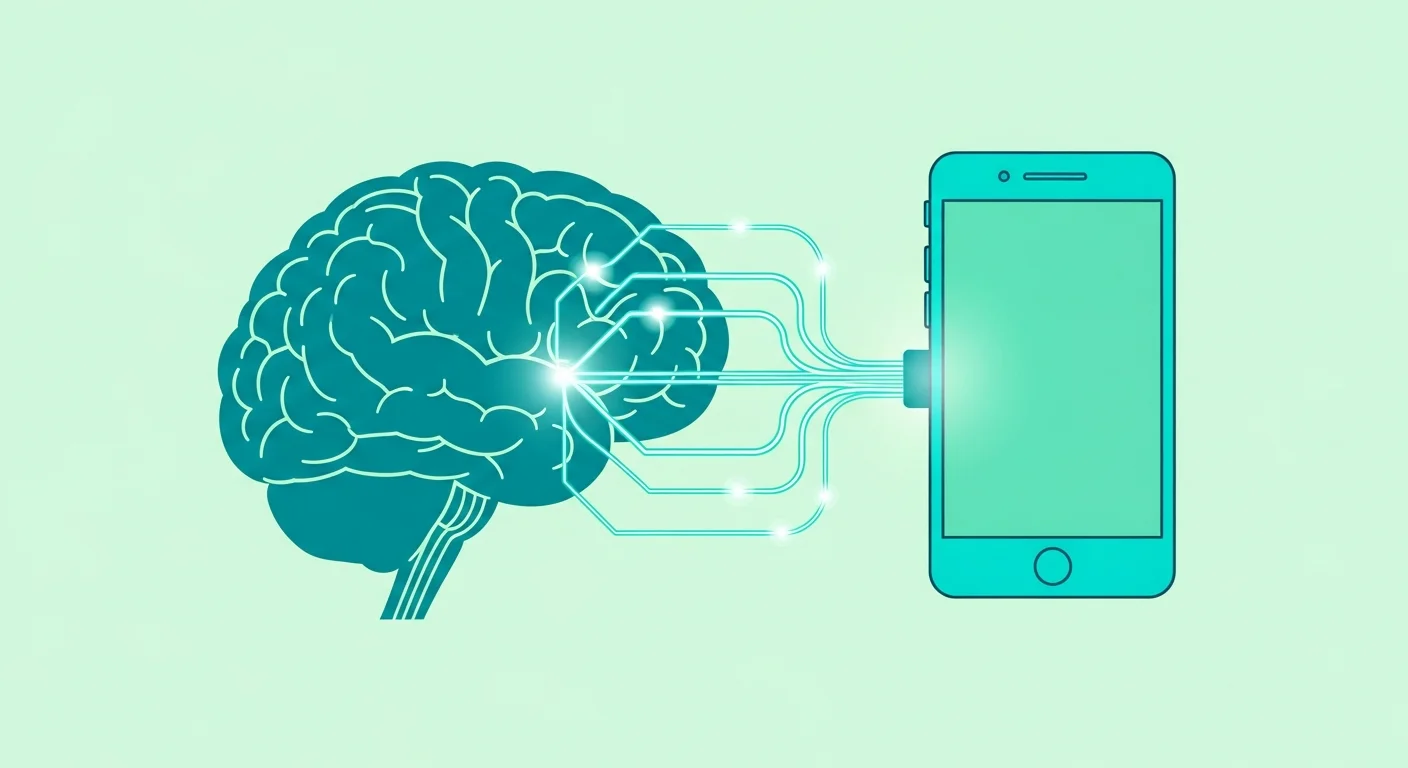
Your brain is being remodeled right now, and you're holding the chisel in your hand. Every swipe, every scroll, every compulsive check of your notifications is literally reshaping the neural architecture inside your skull, carving new pathways while letting others atrophy like unused muscles. The Smartphone Dependency brain effects aren't some distant future consequence or theoretical possibility; they're measurable, documented changes happening in real time to millions of brains worldwide, including yours. And here's the part that should make you pause mid-scroll: brain scan studies on mobile phone dependency reveal structural and functional alterations that look disturbingly similar to changes seen in people dependent on substances like cocaine and opioids. Your phone might not be a drug in the chemical sense, but your brain can't really tell the difference when it comes to hijacking your reward system.
How Does Constant Smartphone Use Change the Brain Over Time?
The Phone Overuse neuroscience reveals transformations that range from subtle to legitimately alarming. Screen Dependency brain changes begin with alterations in gray matter density, particularly in regions responsible for decision making, impulse control, and emotional regulation. Brain imaging studies show that heavy smartphone users have measurably reduced gray matter volume in areas like the anterior cingulate cortex, which is involved in cognitive control and attention. Think of it like this: your brain is constantly optimizing itself for whatever you do most frequently, and if what you do most frequently is rapidly switch between stimuli on a glowing screen, your brain becomes exceptional at that specific task while simultaneously losing capacity for sustained attention, deep thinking, and resisting immediate gratification.
Long-term brain changes from excessive phone use also involve white matter integrity, the connections between different brain regions that allow for complex information processing. Research using diffusion tensor imaging has revealed disrupted white matter in the brain's frontal lobe among individuals with Smartphone Dependency, similar patterns to those observed in people with internet gaming disorder and other behavioral addictions. Mobile dependency brain health deteriorates gradually but measurably as your brain rewires itself around the constant dopamine hits your device provides, creating neural pathways that prioritize quick rewards over delayed gratification, immediate stimulation over patient contemplation. The scary part? Most of this happens completely outside your conscious awareness while you're just "checking Instagram real quick."
What Impact Does Phone Overuse Have on Memory and Focus?
Here's where things get personal and immediately noticeable if you're paying attention. Effects of Screen Dependency on attention and memory manifest in your daily life as that constant feeling that you can't remember what you read five minutes ago, that sense that your thoughts scatter like frightened birds the moment you try to focus on something complex. Digital addiction cognitive impact shows up most prominently in working memory, the mental workspace you use to hold and manipulate information temporarily. Heavy smartphone users demonstrate significantly impaired working memory performance compared to moderate users, which translates directly to difficulty following conversations, retaining information from meetings or lectures, and completing tasks that require holding multiple pieces of information in mind simultaneously.
The attention piece is even more insidious because it creates a feedback loop. Smartphone overuse brain function changes make sustained attention increasingly difficult, so you reach for your phone more often because activities requiring focus feel unbearably effortful, which further damages your attention capacity, making you even more dependent on the quick hits of stimulation your device provides. Neurological signs of digital device addiction include this rapidly declining attention span, often measured by how long you can read, work, or engage in conversation before experiencing the urge to check your phone. If you can't make it through a single page of text or five minutes of a YouTube video without feeling restless and reaching for distraction, that's not a personality quirk or generational difference; that's measurable cognitive impairment resulting from how you've trained your brain through repeated behavior patterns.
Can Heavy Screen Use Rewire the Brain's Reward System?
Absolutely, and this is where Smartphone Dependency starts looking uncomfortably similar to substance addiction at the neurological level. Does constant scrolling damage the brain's reward system? The answer involves understanding how dopamine, your brain's primary reward chemical, responds to smartphone use. Every notification ping, every like on your post, every interesting piece of content triggers a small dopamine release that your brain finds pleasurable. The problem is that this creates what neuroscientists call reward prediction error, where your brain starts anticipating these dopamine hits and reorganizes its priorities around obtaining them. Tech addiction brain damage might be too strong a term, but tech addiction brain alteration is undeniably accurate.
The neuroeffects of screen time on the reward system involve desensitization over time, similar to drug tolerance. Your brain adapts to the constant stimulation by downregulating dopamine receptors, meaning you need more stimulation to achieve the same level of satisfaction. This is why you find yourself scrolling longer, checking more frequently, and feeling less satisfied despite increased usage. Brain scan studies show reduced dopamine receptor availability in smartphone addicts, particularly in the striatum, a brain region crucial for reward processing and motivation. The long-term consequence is anhedonia, the reduced ability to experience pleasure from activities that used to be rewarding, like reading books, having conversations, or spending time in nature. Your brain has been recalibrated to expect the intense, rapid-fire stimulation your phone provides, making everything else feel disappointingly dull by comparison.
Are There Long-Term Brain Risks Linked to Smartphone Dependency?
The question everyone wants answered: is this permanent? Reversing cognitive effects of smartphone overuse is possible but requires understanding the specific risks you're trying to undo. Long-term brain risks include sustained attention deficits, memory problems, increased impulsivity, reduced emotional regulation capacity, and heightened anxiety and depression related to alterations in the prefrontal cortex and limbic system. How Smartphone Dependency affects brain development in teens is particularly concerning because adolescent brains are still forming, meaning the structural changes can potentially affect cognitive development during critical periods. Teenagers with high smartphone use show delayed maturation in brain regions responsible for executive function, essentially training their brains to remain in a more impulsive, less controlled state precisely when those control systems should be strengthening.
The good news, if there is any, is that neuroplasticity works both ways. Your brain's ability to rewire itself in response to Smartphone Dependency also means it can rewire itself back toward healthier patterns when you change your behavior. Studies show that cognitive improvements begin appearing within weeks of reduced screen time, with continued recovery over months as your brain readjusts to less intense stimulation patterns. The prefrontal cortex can regain gray matter density, attention spans can rebuild, and dopamine receptor sensitivity can recover, though the timeline varies based on how long and how severely the addiction has progressed.
How Does Digital Addiction Influence Attention Span and Impulse Control?
Digital addiction cognitive impact on attention and impulse control represents perhaps the most functionally impairing aspect of Smartphone Dependency brain effects. Your ability to focus sustained attention on a single task has likely deteriorated significantly if you're a heavy phone user, not because you're becoming less intelligent but because your brain has been trained to expect constant novelty and stimulation at intervals measured in seconds rather than minutes or hours. The average adult attention span has decreased from 12 seconds in 2000 to roughly 8 seconds today, which is actually shorter than the proverbial goldfish, and smartphone usage is a primary driver of this decline.
Impulse control deterioration happens because the prefrontal cortex, your brain's executive control center, becomes less active and less connected to other brain regions under conditions of chronic smartphone use. This manifests as difficulty delaying gratification, increased tendency toward impulsive decisions, reduced ability to resist checking your phone even when you consciously want to focus on something else, and generally acting on urges rather than thoughtfully considering consequences. You're not becoming weaker willed; your brain's control systems are being systematically undermined by technology specifically designed to bypass those control mechanisms and capture your attention regardless of your conscious intentions.
The Smartphone Dependency brain effects are real, measurable, and significant. But they're also not inevitable or irreversible. Every moment you choose to put down your phone, engage in sustained attention with something meaningful, or resist the urge to check notifications is a moment your brain begins rebuilding the neural pathways that support focus, memory, and self-control. Your brain is remarkably adaptable, which is how it got into this mess but also how it can get out. The question is whether you're willing to give it the chance to heal by changing the behaviors that damaged it in the first place.
Check your screen time. Consider what you're trading. Then decide if whatever's on your phone is worth your brain's long-term health. The choice, for now, is still yours to make.
Ready to assess your smartphone dependency? Use our Digital Wellness Calculator to get your personalized screen time score and start your journey toward better digital wellness.
Note: This article is for informational purposes only and should not be considered medical advice. If you have serious concerns about technology addiction or mental health, please consult with a qualified healthcare provider.