I met Sarah at a coffee shop last month, and within five minutes she told me something that stopped me cold: "I spent an entire year of my life on Instagram. Not metaphorically. Literally 365 days' worth of screen time." She wasn't bragging. She was someone who had finally calculated the cost of her Phone Overuse and decided enough was enough.
The College Student Who Chose Sleep Over Scrolling
Marcus, a 21-year-old engineering student, failed an exam not because he didn't know the material, but because he'd been up until 4 AM watching YouTube shorts. "I remember sitting there, staring at questions I absolutely knew the answers to, but my brain was just... fog," he told me.
His first attempt at quitting was dramatic, deleting all social media at midnight. It lasted exactly 36 hours. The second attempt was smarter. Instead of elimination, Marcus focused on substitution. Every time he felt the urge to scroll before bed, he'd pick up a book. "The first week was torture. My hand would literally reach for my phone autonomously."
He tracked his progress in a simple notebook, logging sleep hours, study efficiency, and mood. Within three weeks, he was sleeping 7.5 hours instead of 5, and his grades started climbing. Six months later, he describes his phone as "a tool I use" rather than "something that uses me."
The Mom Who Realized She Was Parenting Through a Screen
Jessica's wake-up call came from her four-year-old: "Mommy, why do you love your phone more than me?" She'd been physically present for dinner and bedtime stories but emotionally absent, one eye always on her screen.
She installed tracking software and confronted a harsh reality: six hours daily on her phone, mostly mindless consumption that left her feeling hollow. Jessica created "phone-free zones", the dinner table, her daughter's bedroom, and her own bedroom. She bought an actual alarm clock so her phone wouldn't be the first thing she saw each morning.
The real breakthrough came when she started documenting "real-life moments" in a journal, not for Instagram, just for herself. "Tuesday: Built a blanket fort and stayed inside it for an hour, just talking."
Three months in, her screen time dropped to 90 minutes daily. "I feel like I've woken up from a fog. I was there but not there, you know? Now I'm actually here."
The Executive Who Traded Notifications for Focus
David, 43, was a marketing director who prided himself on being "always available." He'd check emails during family dinners and wake up multiple times each night to scroll through work threads. His wife gave him an observation that hit hard: "You're here, but you're not. And I'm tired of competing with a device."
He treated his Phone Overuse like a business problem. A "time audit" revealed he spent 40 hours weekly on his phone, only 8 hours were work-related. The rest? News apps feeding anxiety, LinkedIn feeding his ego, and way too much time on a sports betting app.
His strategy involved "progressive boundaries." Week one: no phones during meals. Week two: no phones after 9 PM. Week three: no phones before 9 AM. Each boundary triggered genuine anxiety that he might miss something crucial. He never did.
Six months in, David's screen time averages 90 minutes daily. He's reading real books again, taken up woodworking, and his marriage has dramatically improved. "I didn't realize how much I was outsourcing my emotional regulation to my phone. Stressed? Scroll. Bored? Scroll. I was using it like a drug."
The Patterns That Actually Work
After talking to dozens of people about their recovery, I've noticed some striking patterns. Nobody quit successfully by just trying harder or having more willpower. Instead, they all did three things:
First, they measured their usage. You cannot change what you don't acknowledge. Marcus, Jessica, and David all confronted their actual usage, not what they thought it was, but what the data showed. Your phone's built-in screen time report is free. Look at it. Really look at it.
Second, they changed their environment. They bought alarm clocks, removed apps from home screens, created charging stations far from where they sleep. Willpower depletes throughout the day. Environmental design works even when your willpower doesn't.
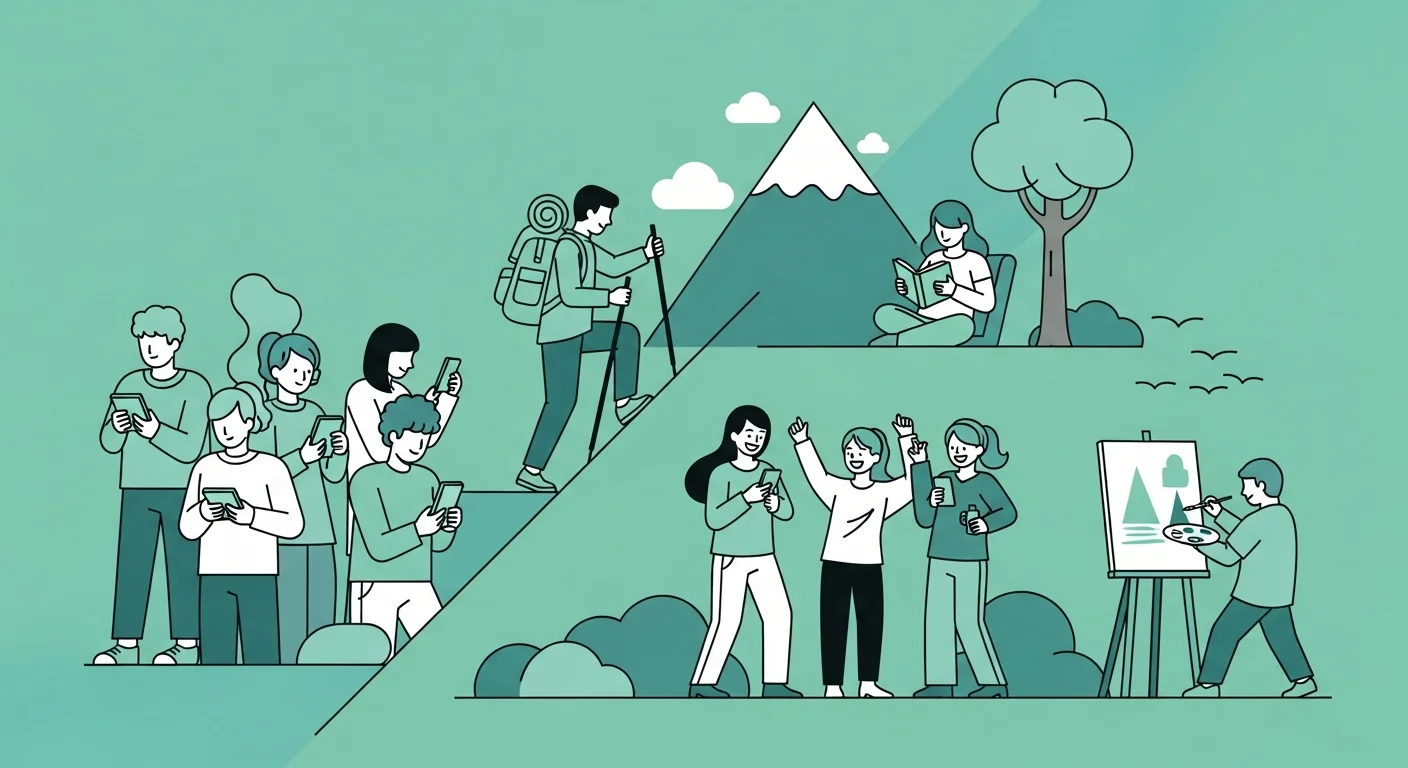
Third, they replaced the behavior. Your phone fills needs, entertainment, connection, escape from difficult emotions. Those needs don't disappear when you put the phone down. Marcus replaced scrolling with reading. Jessica replaced social media with real-life presence. David replaced constant connectivity with woodworking.
The Hard Truth About Quitting
Let's be honest about how difficult this is. Every person I interviewed described the first week as "genuinely awful." Marcus used the word "withdrawal" without irony. Jessica felt phantom vibrations constantly. David experienced low-grade anxiety, like he was forgetting something important all the time.
The social pressure was intense. Friends got annoyed when messages went unanswered for hours. Colleagues questioned their commitment. Our culture has normalized instant availability, and stepping back triggers discomfort in others.
The boredom was another universal challenge. We've trained ourselves to fill every spare moment with phone stimulation. Marcus described standing in a grocery store checkout line without his phone, feeling almost panicky. "I didn't know what to do with myself. Just stand there?" Eventually, yes. And eventually, your brain remembers how to exist without constant input.
The Transformations That Follow
The changes extend far beyond having more free time. Marcus's grades improved so dramatically he earned a scholarship. Jessica's daughter became more independent when Jessica became more present. She also started a freelance graphic design business, something she'd "never had time for."
David's transformation might be the most dramatic. His blood pressure normalized. He stopped taking anxiety medication. He lost 15 pounds without trying. His work performance actually improved despite being "less available" because his output was more focused and higher quality.
What You Can Do Today
The most powerful insight from these stories: you don't need a perfect plan or ideal circumstances to start. Marcus didn't wait until after exams. Jessica didn't wait for her daughter to get older. David didn't wait for a less busy season at work. They started messy, failed multiple times, and adjusted.
Your bottom doesn't have to be dramatic. You don't need to fail out of school or lose your marriage to justify making a change. That persistent, nagging sense that something is off, that's enough. That feeling that your life is happening in your hand instead of in front of you, that's valid.
Finally, this isn't about demonizing technology or going off-grid. Marcus still uses his phone for GPS and music. Jessica still shares photos in a family group chat. David still checks work email. The difference is intention. They use their phones; their phones don't use them.
Your Story Could Be Next
If they did it, you can too. They're not superhuman. They're regular people who got tired of living their lives through a screen and decided to make a change. Their journeys weren't linear, weren't perfect, and weren't easy. But they were worth it.
So what's your story going to be? You don't need to figure it all out right now. You just need to start. Track your screen time today. Be honest about what you find. Pick one small boundary to implement tomorrow. Build from there.
And when you succeed, not if, when, share your story. Because somewhere out there, someone needs to hear that it's possible.
Ready to start your own recovery story? Use our Digital Wellness Calculator to assess your current screen time habits and begin your journey toward better digital wellness.
Note: This article is for informational purposes only and should not be considered medical advice. If you have serious concerns about technology addiction or mental health, please consult with a qualified healthcare provider.