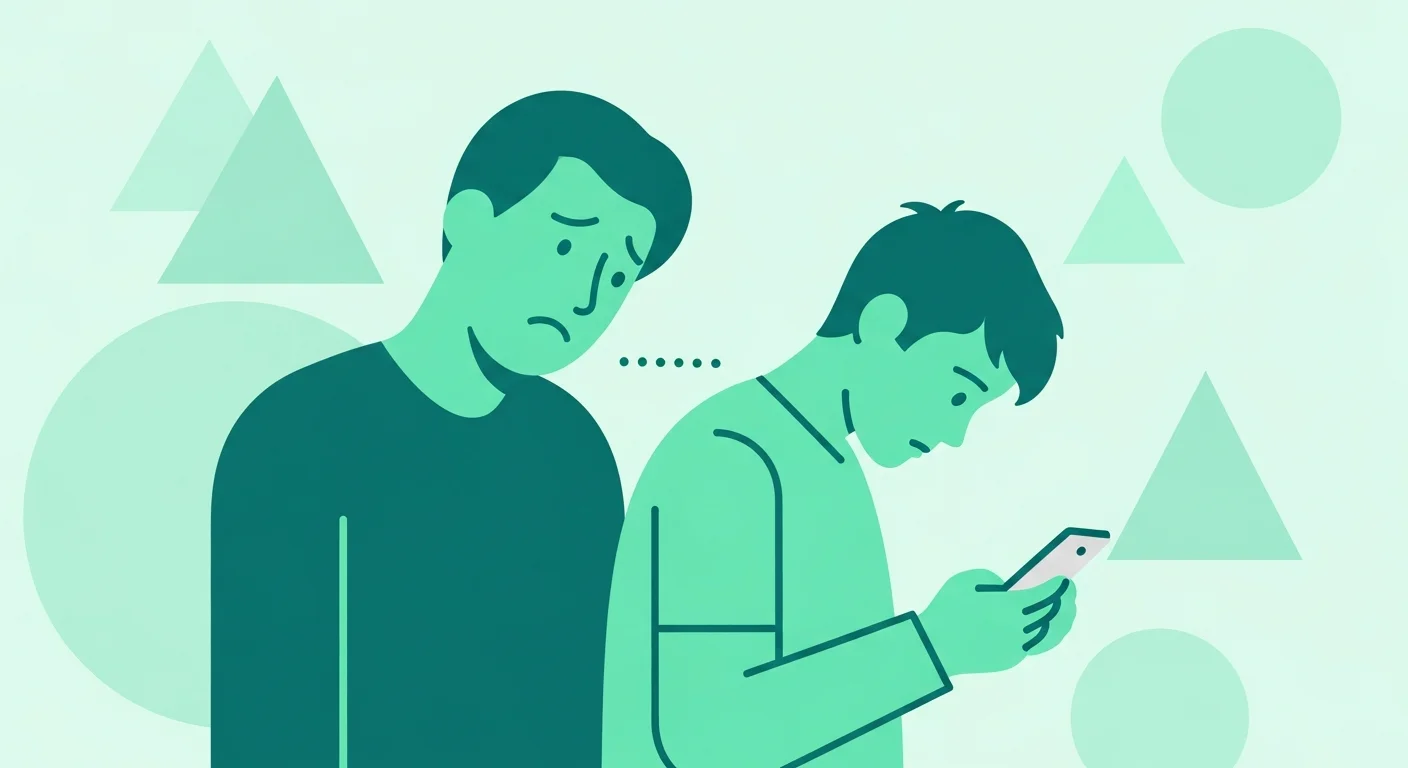
My neck started hurting about six months before I connected it to my phone. I'd wake up with a dull ache at the base of my skull that would intensify throughout the day. I tried new pillows, adjusted my desk setup, even saw a chiropractor who cracked my spine in ways that made my eyes water. Nothing helped. Then one morning, I caught my reflection in a store window while scrolling through my phone, and I saw it: my head jutting forward at a disturbing angle, my shoulders rounded, my whole upper body contorted around this small rectangle of glass. That's when I realized my phone wasn't just stealing my time and attention. It was literally reshaping my body in ways that were causing genuine, measurable physical damage.
What Bodily Harm Comes From Excessive Smartphone Usage?
The physical side effects of excessive phone use extend far beyond the neck pain that brought me to this realization, though that's where most people notice symptoms first. Doctors now have a clinical term for it: "tech neck" or "text neck," referring to the chronic strain caused by holding your head in a forward-tilted position for extended periods. Your head weighs about 10-12 pounds in a neutral position, but when you tilt it forward at a 60-degree angle to look at your phone, the effective weight on your cervical spine increases to around 60 pounds. That's like carrying an eight-year-old child on your neck for hours every day. Over time, this sustained pressure causes inflammation, muscle strain, nerve compression, and can even lead to permanent changes in the curvature of your spine. Physical therapists report seeing patients in their twenties with spinal degeneration typically found in people decades older, and the primary culprit is smartphone posture.
But the damage doesn't stop at your neck. Hand and wrist issues from constant texting addiction are becoming increasingly common, particularly conditions like "texting thumb" (De Quervain's tenosynovitis) and carpal tunnel syndrome. The repetitive motion of thumb-typing and the awkward grip required to hold and manipulate a smartphone create chronic strain on the tendons and nerves in your hands and wrists. I've talked to people who can't open jars anymore, who experience shooting pains when they try to write with a pen, whose thumbs lock up during the day. These aren't elderly people with arthritis. They're young adults whose hands are wearing out prematurely because of how much time they spend on their phones. The long-term body damage from digital device overuse includes conditions that used to take decades of repetitive work to develop, now appearing in people in their twenties and thirties after just a few years of heavy smartphone use.
How Does Screen Overuse Lead to Physical Health Problems?
The relationship between screen time and body strain operates through sustained static positioning, something our bodies are fundamentally not designed for. Humans evolved to move, to change positions frequently, to use our bodies in varied and dynamic ways. But phone use requires you to hold your body in a fixed, unnatural position for extended periods. Your neck stays bent, your shoulders hunch forward, your arms remain in a limited range of motion, your eyes maintain constant focus at a fixed distance. This sustained static positioning creates muscle fatigue, reduces circulation, and puts chronic stress on joints and connective tissues. It's not just one moment of bad posture that causes damage, it's the accumulation of hours daily, days weekly, years consecutively, all in that same harmful position.
The impact of Screen Dependency on posture and joints creates what physical therapists call "upper cross syndrome," a pattern of muscle imbalances where the chest and neck muscles become tight while the upper back and shoulder muscles become weak and overstretched. This imbalance doesn't just cause pain, it alters your entire body mechanics. You start walking differently to compensate. Your breathing becomes more shallow because your chest can't fully expand. Your head posture affects your jaw alignment, potentially causing TMJ problems. The cumulative effect is a body that's literally being reshaped by your phone habits in ways that become progressively harder to reverse the longer the pattern continues.
Which Physical Symptoms Arise From Mobile Device Dependency?
Eye strain from smartphone use might be the most universally experienced physical symptom of Phone Overuse, though people often don't recognize it as such until it becomes severe. Digital eye strain, also called computer vision syndrome, manifests as dry eyes, blurred vision, headaches, and difficulty focusing. The problem stems from multiple factors working together: the close viewing distance of phones, the small text size requiring intense focus, the blue light emission from screens, and the dramatically reduced blink rate that occurs when you're absorbed in your device. Studies show that people blink about 60% less when looking at screens compared to normal rates, which means your eyes aren't getting properly lubricated. Over time, this can lead to chronic dry eye syndrome that persists even when you're not using your phone.
But beyond the obvious eye symptoms, phone overuse leading to vision problems includes more subtle changes that accumulate over years. Increased rates of myopia (nearsightedness) correlate strongly with screen time, particularly in children and adolescents whose eyes are still developing. The sustained near-focus required for phone use affects how the eye grows and develops, potentially causing permanent changes in vision that require corrective lenses. I know someone who had perfect vision until their mid-twenties, then suddenly needed glasses after years of heavy phone use. Their optometrist wasn't surprised, citing a dramatic increase in young adults developing myopia linked directly to device use patterns. The human eye didn't evolve to stare at a glowing rectangle six inches from your face for hours daily, and we're only beginning to understand the long-term consequences of this unprecedented visual behavior.
Can Constant Phone Use Cause Long-Term Body Strain?
Absolutely, and one of the most insidious aspects of phone-related body strain is how gradually it develops, making it easy to ignore until you've accumulated significant damage. The sleep disruption from Screen Dependency deserves particular attention because it amplifies every other physical health problem. The blue light emitted by phone screens suppresses melatonin production, the hormone that regulates your sleep-wake cycle. When you scroll before bed, you're essentially telling your brain it's daytime, making it harder to fall asleep and reducing the quality of sleep you do get. Poor sleep doesn't just make you tired, it impairs tissue repair, weakens immune function, increases inflammation throughout your body, and makes you more susceptible to pain and injury. The neck pain from tech neck gets worse when you're sleep-deprived. The eye strain intensifies. The muscle fatigue accumulates faster. Sleep disruption doesn't just coexist with other phone-related physical problems, it actively makes them worse.
The research on mobile dependency disrupting sleep patterns shows alarming correlations with a range of health issues beyond just feeling tired. People who use their phones heavily before bed have higher rates of obesity, cardiovascular problems, and metabolic disorders. Part of this stems from the sleep disruption itself, but part of it comes from the sedentary nature of phone use. You're sitting or lying down, barely moving, for hours daily. That lack of physical activity combined with poor sleep creates a perfect storm for deteriorating physical health. Your body needs movement and rest in roughly equal measures to maintain health, and Phone Overuse disrupts both simultaneously.
What Are the Main Health Risks Tied to Digital Overuse?
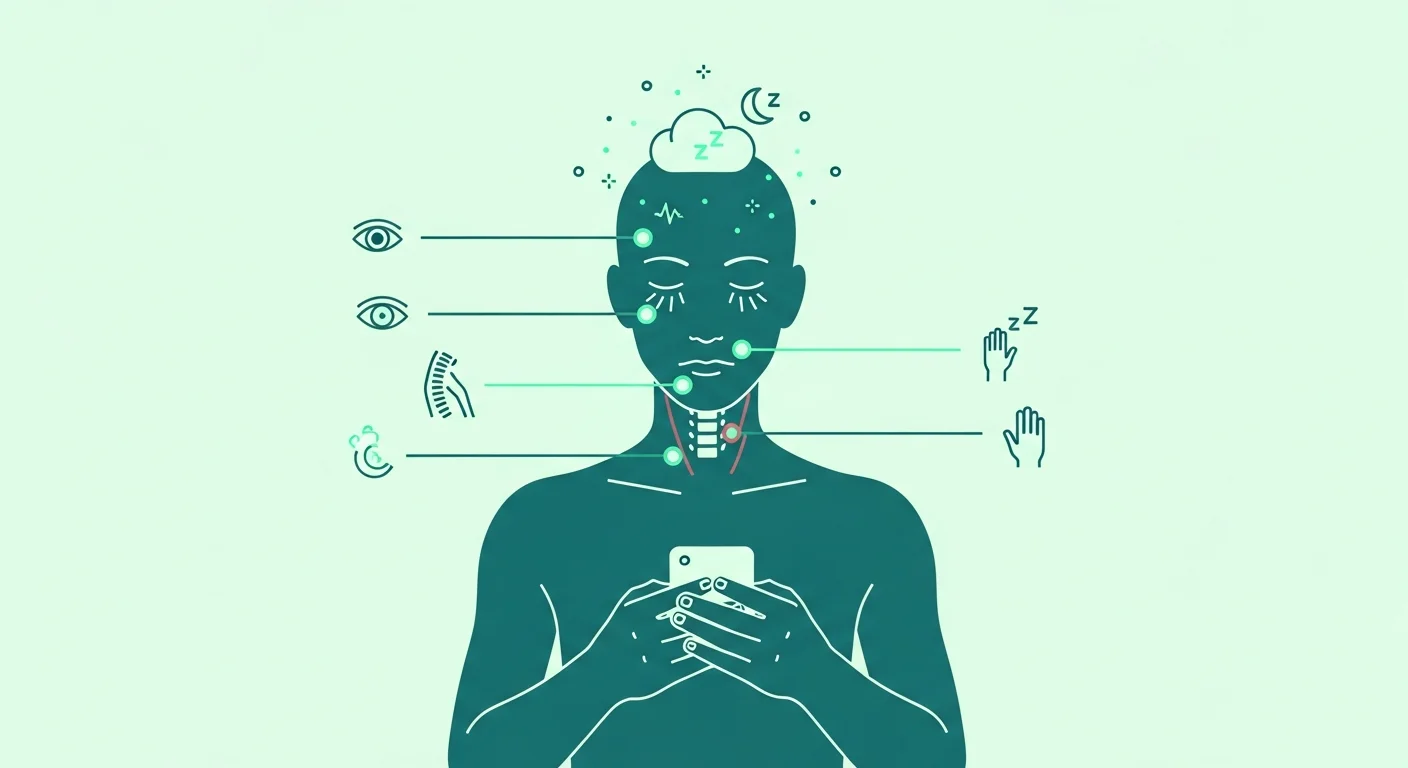
The main health risks from smartphone physical symptoms cluster around musculoskeletal problems, vision deterioration, and sleep disruption, but the interconnected nature of these issues creates compound effects that are greater than the sum of their parts. Someone with tech neck often develops headaches, which leads to poor sleep, which increases pain sensitivity, which causes more tension in the neck and shoulders, creating a self-reinforcing cycle of physical decline. Breaking this cycle requires addressing phone use directly because treating the symptoms without changing the underlying behavior is like bailing water from a boat without fixing the hole.
What concerns health professionals most is that we're seeing these effects in younger and younger populations. Physical therapists report treating teenagers for spinal problems that used to appear only in middle age. Optometrists prescribe glasses to children whose eyes haven't finished developing. Sleep specialists see adolescents with chronic insomnia linked directly to bedtime phone use. We're conducting an uncontrolled experiment on an entire generation's physical development, and the early results are deeply concerning.
Listen to Your Body
Your body is trying to tell you something through that neck pain, those headaches, that eye strain, that exhaustion. The question is whether you're willing to listen. Start by noticing your posture right now as you read this. Where is your head? How are your shoulders positioned? How do your eyes feel? That awareness is the first step toward change. Your phone isn't worth sacrificing your physical health. It never was.
Ready to assess your smartphone dependency? Use our Digital Wellness Calculator to get your personalized screen time score and start your journey toward better digital wellness.
Note: This article is for informational purposes only and should not be considered medical advice. If you have serious concerns about technology addiction or mental health, please consult with a qualified healthcare provider.