Let me tell you something I realized while standing in line at a coffee shop last Tuesday: every single person around me was staring at their phone. Including me. We've become a society of head-down scrollers, thumb-tappers, and notification-checkers, and honestly? It's exhausting. If you've ever felt that little twinge of guilt when your screen time report pops up (mine once clocked in at a humbling 7 hours and 42 minutes), you're not alone. The good news is that setting boundaries for healthy phone use isn't about going full hermit mode or tossing your device into a river. It's about reclaiming your time, your attention, and frankly, your sanity.
Why Your Phone Habits Might Need a Reality Check
Before we dive into solutions, let's talk about the elephant in the room, or rather, the glowing rectangle in your pocket. What are the signs that my phone habits have become unhealthy? Well, if you're checking Instagram before you've even opened your eyes in the morning, or if you feel genuine anxiety when your battery dips below 20%, we might need to have a conversation. Other red flags include reaching for your phone during every spare second, feeling phantom vibrations, struggling to focus on tasks without checking notifications, or realizing you've spent two hours watching TikToks when you only meant to "quickly check" something.
I've been there. We all have. The thing about smartphone usage limits is that our devices are designed to be addictive. Every ping, every like, every colorful app icon is engineered to grab your attention and hold it hostage. Understanding this isn't about self-blame, it's about recognizing that you're up against some seriously sophisticated psychology.
Breaking the Morning Scroll: Start Your Day Right
How can I break the habit of checking my phone first thing in the morning? This question hits different because that morning reach has become almost reflexive for most of us. Here's what worked for me: I bought an actual alarm clock. Revolutionary, right? Turns out, when your phone isn't your alarm, you don't need it on your nightstand. Creating a phone-free bedtime routine doesn't just improve your morning, it transforms your entire sleep quality.
Try this: charge your phone in another room overnight. Use those first waking moments to stretch, breathe, or even just stare at the ceiling and think about absolutely nothing. Your emails, your group chats, that thing your coworker said yesterday, they'll all still be there in 30 minutes. The benefits of limiting smartphone use start the moment you give yourself permission to wake up slowly, without the immediate assault of notifications and world news.
Creating Your Phone-Free Zones
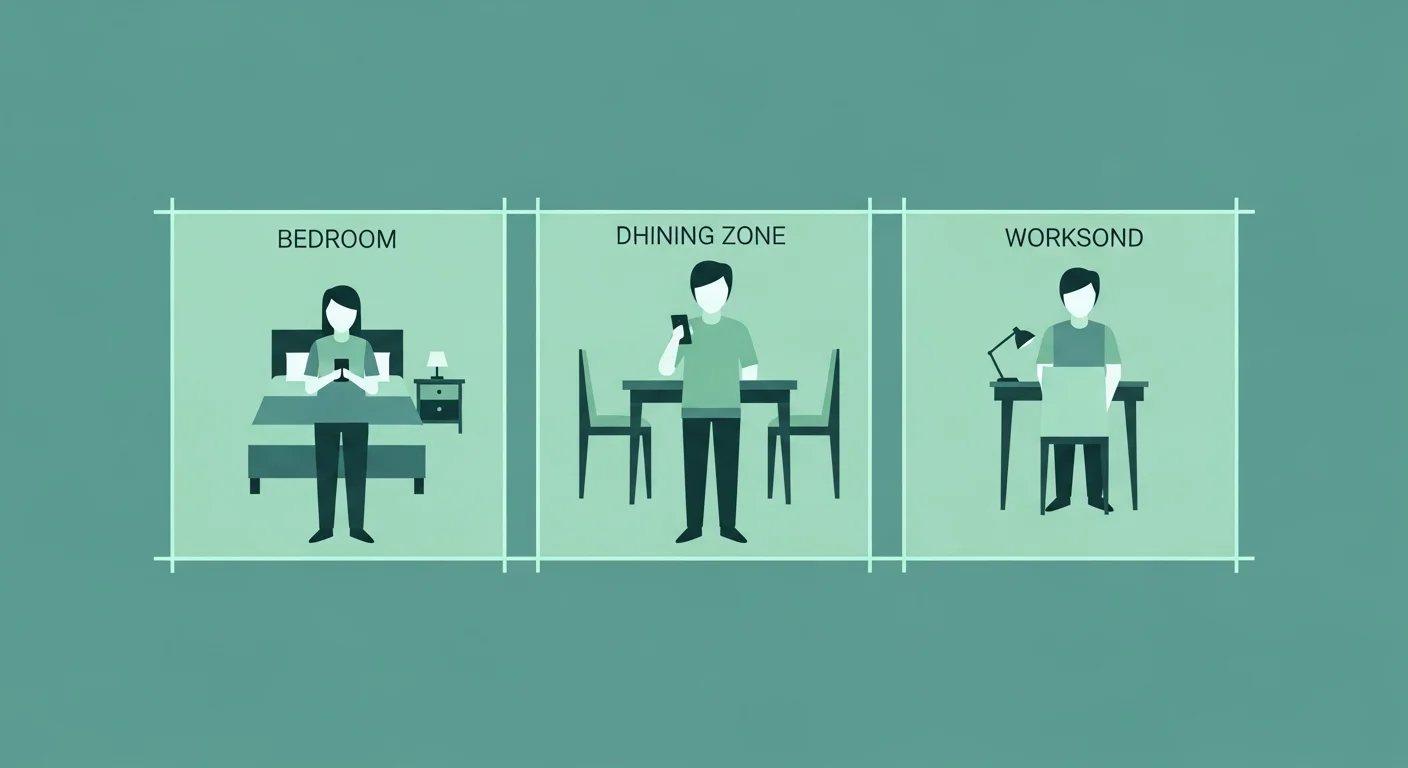
How can I establish technology-free zones in my home? This is where digital wellness strategies get practical and surprisingly effective. Think of your home as having different energy zones. Your bedroom should be a sanctuary for rest, not a place where you're watching Netflix at 2 AM or scrolling through work emails. Your dining table deserves real conversations, not distracted half-listening while someone tells you about their day.
Start small. Pick one room or one specific area where phones don't belong. For many families, the dinner table becomes sacred ground. Create a little basket or charging station where everyone (and I mean everyone, parents included) drops their devices during meals. The first few dinners might feel awkward, like you're all suddenly remembering how to talk to each other, but stick with it. Setting family technology rules works best when they apply universally, not just to the kids.
The Art of Mindful Technology Use
What are effective strategies for limiting smartphone usage daily? Let me share what actually works, not just what sounds good in theory. First, turn off notifications for everything except actual humans trying to reach you. Your phone doesn't need to buzz every time someone likes your photo or a sale starts at your favorite store. This simple step alone can reduce your urge to check your device by about 60%.
Second, use the grayscale trick. Most phones let you switch to black and white mode, and suddenly Instagram becomes way less appealing when it looks like a 1950s newspaper. Third, and this is crucial, delete social media apps from your phone for even just one week. You can still access them through your browser if you really need to, but adding that extra step creates enough friction to break the automatic scrolling habit. These digital detox tips for beginners might sound extreme, but they're surprisingly liberating.
Tools and Features That Actually Help
What features can I use on my device to monitor and reduce screen time? Your smartphone ironically comes equipped with tools designed to help you use it less. Both iOS and Android have built-in screen time management features that show you exactly where your hours are going. The data can be sobering, but it's also enlightening.
| Feature | What It Does | Best For |
|---|---|---|
| Screen Time (iOS) | Tracks usage, sets app limits | Apple users wanting detailed insights |
| Digital Wellbeing (Android) | Similar tracking with focus mode | Android users seeking balance |
| App Timers | Limits time on specific apps | Breaking social media habits |
| Do Not Disturb | Silences notifications | Focus work or quality time |
| Downtime | Schedules phone-free periods | Evening routines and sleep |
Beyond built-in features, the best screen time tracking apps include Freedom, which blocks distracting websites and apps, and Forest, which gamifies staying off your phone by growing virtual trees. There's something oddly motivating about not wanting to kill your digital forest.
How to Stop Phone Overuse Naturally
How do I talk to my family about creating digital boundaries together? This conversation matters because Phone Overuse solutions work better when everyone's on board. Start by sharing your own struggles rather than pointing fingers. Say something like, "I've noticed I'm on my phone way too much, and I want us all to be more present with each other." Frame it as a family wellness project, not a punishment.
Set specific device-free times together. Maybe it's the first hour after everyone gets home, or Sunday mornings, or during car rides longer than 20 minutes. The key is consistency and mutual accountability. When your teenager sees you respecting the boundaries too, they're way more likely to buy in. Plus, modeling healthy tech habits is one of the most powerful forms of parenting.
The Real Benefits You'll Notice
The benefits of limiting smartphone use go way beyond just "being on your phone less." Within a week or two of establishing healthy phone boundaries, most people report sleeping better, feeling less anxious, and actually remembering conversations they have with people. Your attention span starts to stretch back out. You finish books. You notice things like the sky and birds and the way afternoon light hits your living room wall.
I'm not going to pretend it's easy. There will be moments of boredom, those weird gaps in your day when you used to automatically reach for your phone. Sit with that discomfort. It's actually where creativity and real thinking happen. Your brain needs downtime, actual device-free time where it can wander and process and just be.
Making It Stick
The truth about mindful technology use is that it's not a destination, it's an ongoing practice. Some days you'll nail it. Other days you'll fall down a YouTube rabbit hole at 11 PM and wonder where the last two hours went. That's okay. Progress isn't perfection, it's just being slightly more intentional today than you were yesterday.
Start with one boundary. Just one. Maybe it's no phones in the bedroom, or no scrolling during meals, or a hard stop on screen time after 9 PM. Master that one thing, let it become normal, then add another. Building reduce screen time habits is like building any other habit, it takes consistency, patience, and a willingness to forgive yourself when you slip up.
Your phone is a tool, an incredibly useful one, but it's not your life. The moments that matter, the conversations that count, the experiences that stay with you, they're all happening in the real world, not behind a screen. Setting boundaries isn't about deprivation. It's about making space for what actually matters.
So here's my challenge to you: pick one strategy from this guide and implement it today. Not tomorrow, not next week, today. Your future self, the one who's more present, more focused, and way less stressed, will thank you.
What's your biggest phone habit you want to change? Start there, and let the rest follow.
Ready to assess your smartphone dependency? Use our Digital Wellness Calculator to get your personalized screen time score and start your journey toward better digital wellness.
Note: This article is for informational purposes only and should not be considered medical advice. If you have serious concerns about technology addiction or mental health, please consult with a qualified healthcare provider.