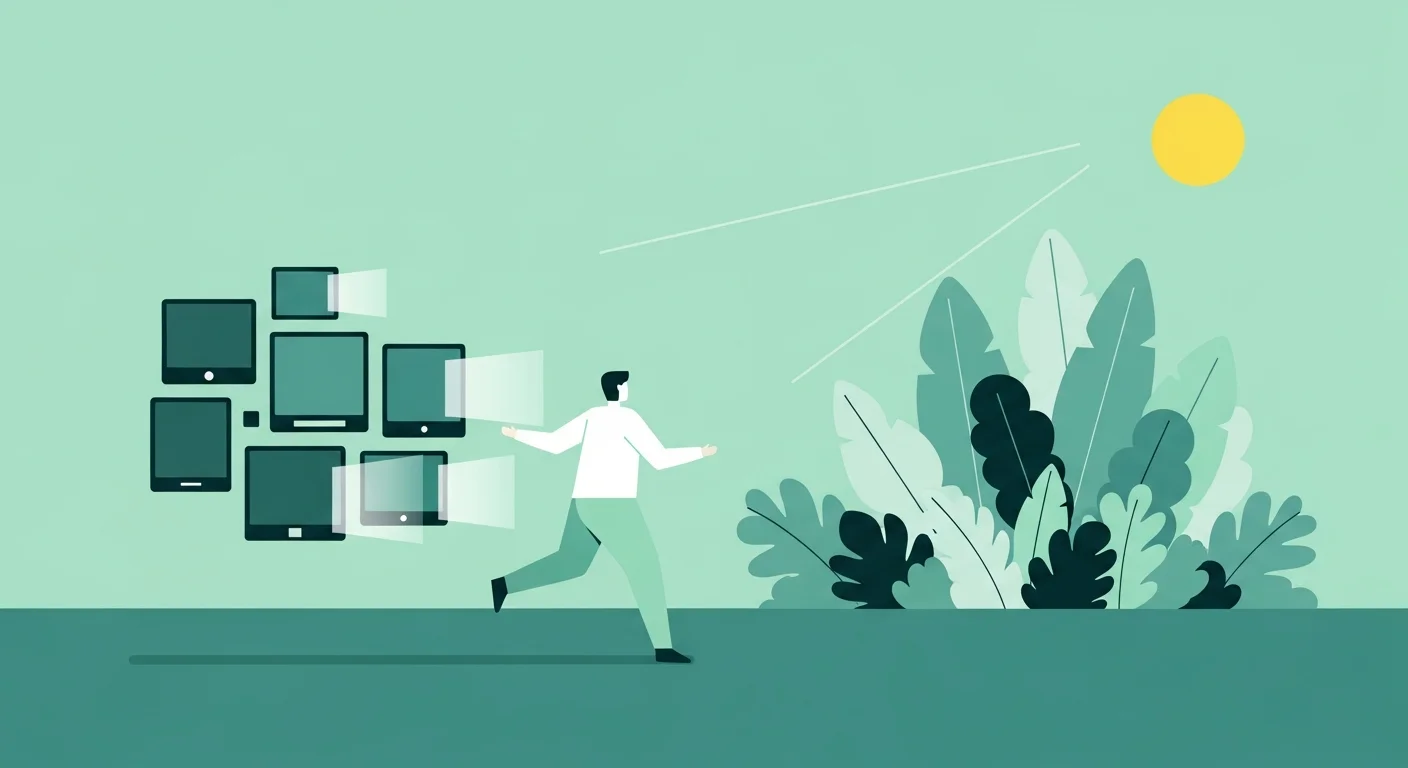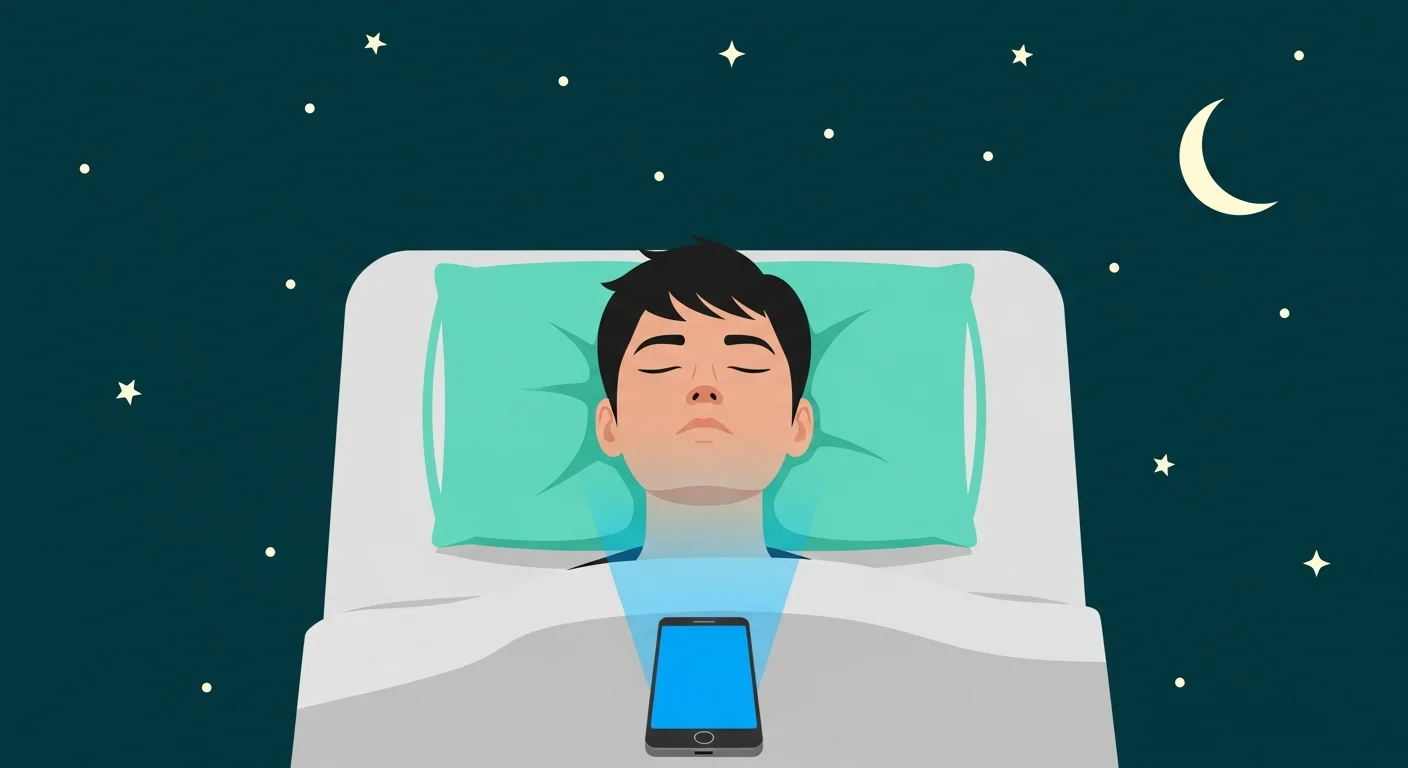
I told myself I'd go to sleep at 11 PM. That was four hours ago. Now it's 3 AM, my eyes burn like I've been staring into the sun, and I'm still scrolling through TikTok watching videos I won't remember in the morning. This happens at least three nights a week, this pattern where I'm genuinely exhausted but somehow can't put my phone down. The rational part of my brain knows I need sleep. The addicted part keeps whispering "just one more video, just check this one last thing." Tomorrow I'll be a zombie, struggling through the day fueled by coffee and regret, knowing I'll probably repeat this exact pattern tomorrow night. The connection between Phone Overuse and sleep isn't just about staying up too late. It's about your phone fundamentally breaking your brain's ability to recognize when it needs rest.
Why Does Excessive Smartphone Use Interfere With Sleep Quality?
The relationship between smartphone sleep disruption and your body's natural rhythms operates through multiple biological mechanisms that work together to absolutely wreck your ability to sleep well. The most well-known culprit is blue light, the specific wavelength of light emitted by phone screens that your brain interprets as daylight. When blue light hits your retinas at night, it suppresses the production of melatonin, the hormone that makes you feel sleepy and regulates your circadian rhythm. This isn't a minor effect, studies show that two hours of screen exposure before bed can suppress melatonin by up to 22%, essentially telling your brain it's the middle of the afternoon when it should be preparing for sleep. Your body is trying to wind down, but your phone is screaming "stay awake, stay alert, something important might be happening."
But blue light sleep problems represent only part of the story. The cognitive stimulation from your phone keeps your brain activated in ways that are fundamentally incompatible with sleep. When you're scrolling through social media, reading news, watching videos, or texting friends, your brain is processing information, making decisions, experiencing emotions, and staying engaged. Sleep requires your brain to disengage, to stop processing external stimuli and turn inward. You can't force that transition to happen instantaneously. If you're absorbed in your phone at 11:45 PM and then try to sleep at midnight, your brain is still firing on all cylinders, still processing all that input, still activated and alert. The content itself matters too, particularly for evening phone use ruining sleep cycles. If you're watching something that triggers strong emotions, whether that's anxiety from news, anger from social media arguments, or excitement from entertaining content, those emotional states persist after you put the phone down, making it nearly impossible to relax into sleep.
How Can Mobile Device Habits Lead to Insomnia or Poor Rest?
The link between Smartphone Dependency and insomnia becomes clearer when you understand that addiction fundamentally rewires your reward system in ways that interfere with natural sleep pressure. Throughout the day, your brain accumulates adenosine, a neurotransmitter that builds up and creates "sleep pressure," that increasingly strong urge to rest. Under normal circumstances, when adenosine reaches high enough levels, you feel irresistibly tired and sleep follows naturally. But Phone Overuse disrupts this process by providing constant dopamine hits that override your natural sleep signals. Each notification, each interesting video, each engaging post triggers a small dopamine release that makes your brain prioritize continued engagement over the fundamental need for rest. You're literally choosing dopamine over sleep, not consciously, but because your addicted brain has learned to value those digital rewards more than biological necessities.
Fixing sleep problems from excessive screen time requires understanding that nighttime scrolling addiction doesn't just delay when you fall asleep, it degrades the quality of sleep you eventually get. Even if you finally pass out at 3 AM from sheer exhaustion, the sleep you experience after hours of screen exposure is lighter, more fragmented, and less restorative than it should be. Your brain doesn't transition smoothly through the normal sleep stages. You spend less time in deep sleep and REM sleep, the phases where your brain consolidates memories, processes emotions, and performs essential maintenance functions. Studies on mobile addiction and chronic sleep deprivation show that people who use their phones heavily before bed report feeling less refreshed in the morning even when they've technically slept for seven or eight hours, because the quality of that sleep has been compromised by their device use.
What Role Does Screen Dependency Play in Sleep Disturbances?
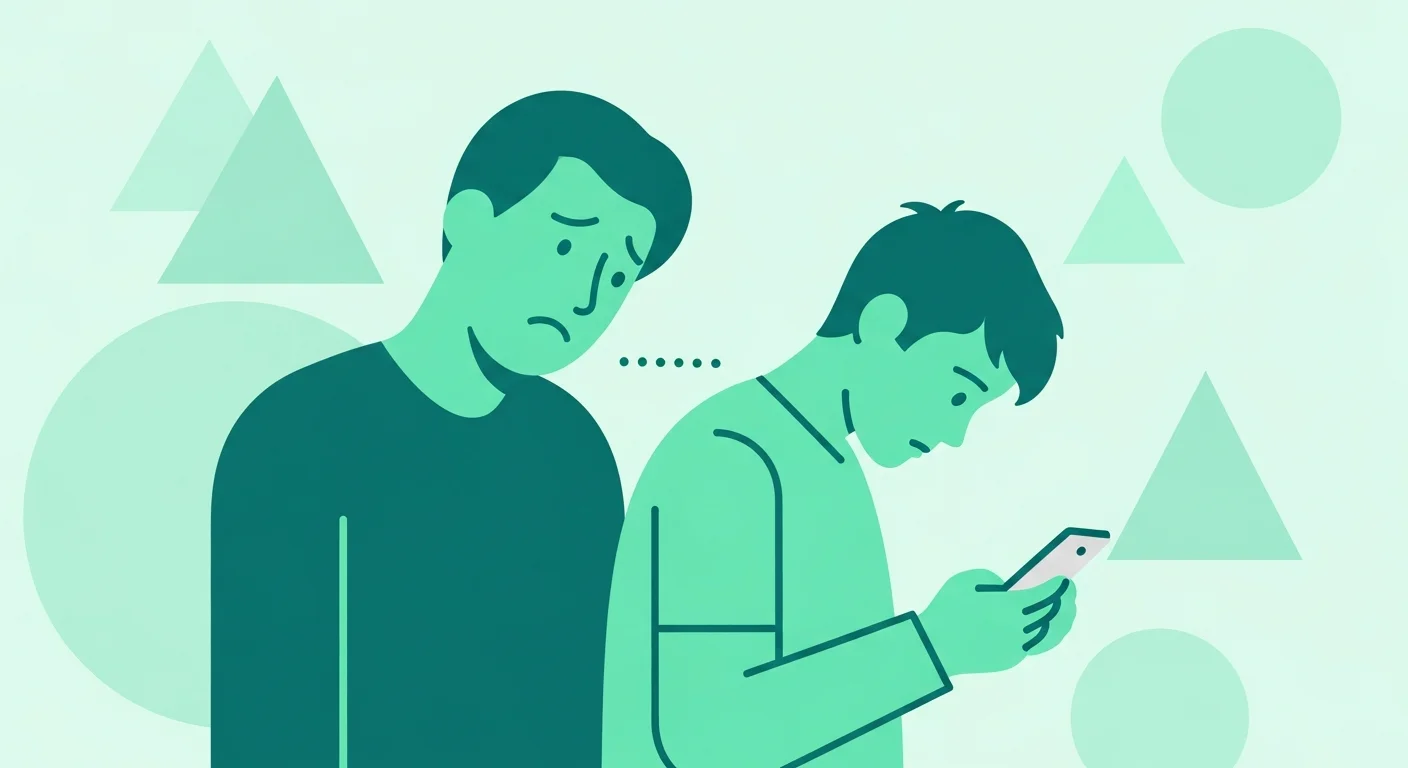
Screen Dependency creates a vicious cycle where poor sleep increases phone dependence, which further degrades sleep quality, which increases reliance on the phone as a coping mechanism. When you're sleep-deprived, your prefrontal cortex, the part of your brain responsible for self-control and decision-making, functions poorly. This makes it significantly harder to resist the urge to check your phone, to stop scrolling, to make the difficult choice to put the device away and try to sleep. You're operating with diminished willpower precisely when you need it most to break the pattern. Meanwhile, the exhaustion from poor sleep makes your days more stressful and overwhelming, which drives you to seek comfort and distraction in your phone, which perpetuates the cycle of nighttime use and sleep disruption.
The effects of social media scrolling on sleep quality deserve particular attention because social media is specifically engineered to maximize engagement through unpredictable rewards and social comparison, both of which spike arousal and anxiety right when you're trying to wind down. You see posts from friends having amazing experiences, read news that makes you worried about the world, encounter content that triggers strong emotional reactions. Your nervous system responds to all this stimulation as if these were real, immediate events requiring your attention and response, not distant digital content with no bearing on your actual safety or wellbeing. That physiological arousal, the elevated heart rate and stress hormones, can persist for an hour or more after you've put your phone down, making sleep physiologically difficult even if you're mentally exhausted.
In What Ways Does Nighttime Phone Scrolling Cause Sleep Issues?
Nighttime scrolling doesn't just delay sleep onset, it fundamentally alters your relationship with bedtime in ways that create long-term sleep problems. Your bed should be strongly associated in your brain with sleep. But when you spend hours in bed scrolling, you're training your brain to associate your bed with alertness, engagement, and stimulation. This conditioning makes it progressively harder to fall asleep even on nights when you're not using your phone, because your brain has learned that bed equals wakefulness, not rest. Sleep specialists call this "stimulus control," and breaking the association between your bed and phone use is often one of the first interventions for chronic insomnia.
Why bedtime texting causes restless nights extends beyond just the blue light and stimulation. Texting creates open loops in your mind, unfinished conversations that your brain continues processing even after you've stopped actively engaging. If you end a text conversation on an uncertain note, waiting for a response or worrying about how something was received, your brain remains partially activated, monitoring for that notification, unable to fully let go and sink into sleep. The anxiety of anticipation, even low-level, is incompatible with the parasympathetic nervous system dominance required for quality sleep.
How Does Digital Overuse Prevent Restful Nighttime Recovery?
The cumulative effect of tech habits and sleep deprivation creates what researchers call "sleep debt," a chronic deficit that accumulates over time and cannot be easily repaid with occasional long sleep sessions. Your body needs consistent, quality sleep every night to perform essential functions: cellular repair, immune system maintenance, memory consolidation, emotional processing, and hormone regulation. When digital addiction and sleep loss become chronic, every system in your body begins operating suboptimally. You're more susceptible to illness, more emotionally reactive, less cognitively sharp, more prone to anxiety and depression. The irony is that poor sleep makes you reach for your phone even more desperately as a coping mechanism, deepening the dependency and worsening the sleep problems in a downward spiral that's difficult to escape.
Overcoming phone habits for better sleep hygiene requires creating clear boundaries that your addicted brain cannot easily rationalize away. The most effective strategy is keeping your phone out of your bedroom entirely, charging it in another room and using an actual alarm clock. This eliminates the temptation and breaks the conditioned association between your bed and your device. If that feels too extreme, start with smaller boundaries: no screens for the last hour before bed, phone on airplane mode after 10 PM, or keeping your device across the room instead of on your nightstand.
Reclaim Your Rest
Your sleep matters more than whatever is on your phone. The messages can wait until morning. The videos will still be there tomorrow. Your brain desperately needs the rest that your phone is stealing, and every night you choose scrolling over sleeping is a night you're not giving your body what it fundamentally requires to function. Tonight, try something radical: put your phone away at 10 PM. Notice what happens. The anxiety will spike initially, but if you can push through that discomfort, you might actually sleep. And that sleep might be the best you've had in months.
Ready to assess your smartphone dependency? Use our Digital Wellness Calculator to get your personalized screen time score and start your journey toward better digital wellness.
Note: This article is for informational purposes only and should not be considered medical advice. If you have serious concerns about technology addiction or mental health, please consult with a qualified healthcare provider.