I caught myself doing it again yesterday. Reaching for my phone the second I woke up, before my eyes fully opened, before I'd even registered what day it was. It's become such muscle memory that I don't remember deciding to do it anymore. If you're nodding along right now, we need to have a conversation about building sustainable tech routines for mental wellbeing, because this automatic reach is exactly where healthy tech habits either form or fall apart.
What Strategies Create Sustainable Device Routines for Enduring Wellness?
Creating digital wellbeing habits that actually stick requires more than just good intentions and a motivational quote. You need systems, not wishes. Think of it like this: you wouldn't try to get fit by occasionally thinking about the gym, right? Same principle applies to tech wellness routines. The difference between people who maintain lifelong screen balance and those who constantly battle their devices comes down to deliberate structure rather than willpower alone.
Start with the 20-20-20 rule, which sounds ridiculous until you realize how much eye strain you've been ignoring. Every 20 minutes, look at something 20 feet away for 20 seconds. Set subtle reminders on your device initially because, let's face it, you'll forget otherwise. This simple practice creates natural breaks in your screen time without requiring you to dramatically change your life. Building sustainable tech routines for mental wellbeing means starting small and stacking habits gradually, like adding weights to a barbell as you get stronger.
The second non-negotiable strategy involves establishing tech-free zones in your life. Not tech-limited zones. Tech-free. Your bedroom tops this list because how to form tech behaviors preventing Screen Dependency starts with protecting your sleep. Charge your phone in another room. Yes, even if you use it as an alarm clock. Buy an actual alarm clock for fifteen dollars and reclaim your mornings from the scroll spiral. Your bathroom is another sacred space. Taking your phone to the toilet has become so normalized we forget how bizarre it is. Those five minutes of doing nothing? That's when your brain processes information, generates ideas, and actually rests. Don't rob yourself of those moments.
How Do You Develop Balanced Tech Behaviors That Last a Lifetime?
Long-term strategies for family healthy device use begin with modeling, not mandating. Kids don't listen to what you say about phones, they watch what you do with yours. If you're preaching balance while texting during dinner, guess what lesson they're learning? Transforming bad screen patterns into wellness lifelong requires honesty about your own relationship with technology before you can guide anyone else's.
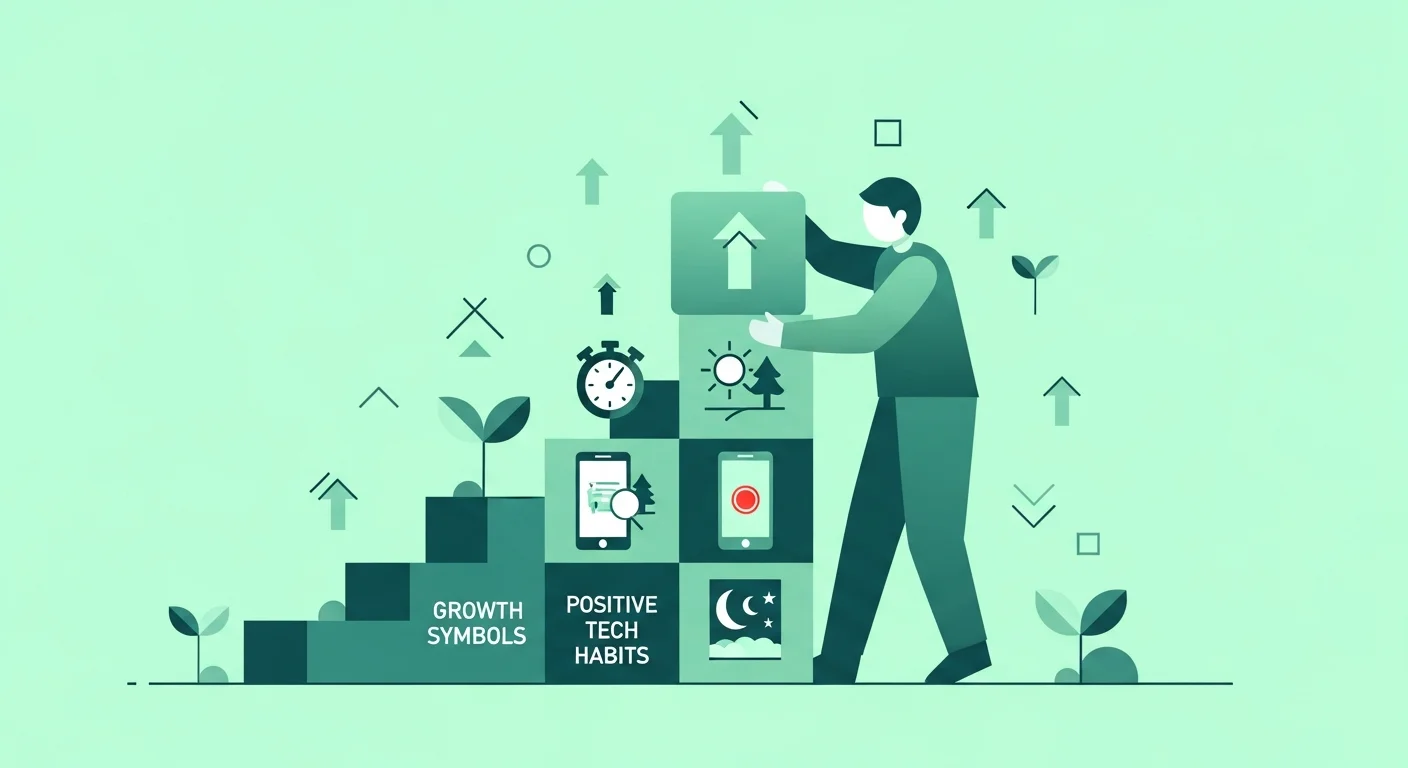
Here's a table that's helped countless people I know shift from chaotic tech use to sustainable device habits:
Building Your Tech Wellness Foundation
| Time of Day | Healthy Tech Habit | Why It Works | Difficulty Level |
|---|---|---|---|
| Morning (First Hour) | No phone for 60 minutes | Reduces morning anxiety, sets intentional tone | Hard |
| Midday (Work Hours) | Batch notifications to hourly | Maintains focus, reduces distraction | Medium |
| Evening (Pre-Dinner) | 30-minute device pause | Improves digestion, family connection | Easy |
| Night (Last Hour) | Blue light filter on, limited use | Better sleep quality, mental wind-down | Medium |
Daily practices creating positive digital habits forever come from understanding your personal triggers. When do you automatically grab your phone? Waiting in line? Feeling awkward at social events? Avoiding a difficult task? Once you identify these patterns, you can replace them with healthier responses. I started carrying a small notebook for those in-between moments, and honestly, it changed everything. Instead of scrolling through nothing, I jot down ideas, observations, random thoughts. My creativity exploded because my brain finally had space to wander.
Which Daily Practices Foster Positive Digital Habits for Long-Term Health?
Expert tips on tech habits boosting lifelong productivity always circle back to one core principle: intention over automation. Every time you pick up your device, pause for literally two seconds and ask yourself why. This micro-moment of awareness interrupts the autopilot that drives most unhealthy tech behaviors. You'd be shocked how often the answer is "I don't actually know why I picked this up." That's your cue to put it back down.
Tech habit building requires creating friction for bad behaviors and removing friction for good ones. Want to spend less time on social media? Delete the apps from your phone and only access them via browser. That extra login step creates just enough resistance to make you reconsider whether you really need to check Instagram right now. Meanwhile, make positive tech behaviors ridiculously easy. Keep your meditation app on your home screen. Set your morning playlist to auto-start when your alarm goes off so you're not tempted to dive into emails immediately.
A step-by-step guide to lifelong healthy smartphone habits must address notifications because they're the enemy of sustained attention. Turn off everything except calls and texts from actual humans you know personally. News alerts? Off. Social media notifications? Off. Every app trying to lure you back with red badges and buzz? All off. Your phone should serve you, not summon you. This single change creates more mental space than almost any other digital wellbeing habit you can adopt.
Why Focus on Tech Patterns That Support Ongoing Mental and Physical Balance?
Because how can lifelong tech wellness prevent screen dependency pitfalls if we're only thinking about quick fixes instead of lasting change? The way you interact with technology today shapes your brain's neural pathways for tomorrow. Every time you interrupt a conversation to check your phone, you're training your brain that digital input matters more than human connection. Every time you doom-scroll before bed, you're teaching your nervous system that anxiety is the appropriate pre-sleep state. These patterns compound, for better or worse.
The good news? Positive tech behaviors build on themselves just as powerfully as negative ones. When you consistently maintain tech wellness routines, your brain adapts. You stop feeling phantom vibrations in your pocket. The urge to check your phone every few minutes fades. You rediscover the ability to be bored without immediately seeking digital stimulation, and boredom, it turns out, is where creativity and innovation actually live. Long-term digital health isn't about becoming a digital monk who lives off-grid. It's about using technology purposefully instead of being used by it.
Your Tech Wellness Journey Starts With One Change
Look, transforming your relationship with technology won't happen overnight, and anyone selling you a magic solution is lying. But here's what I know for sure: every person I've watched successfully build sustainable device habits started with one small change and protected it fiercely until it became automatic. Maybe for you that's phone-free mornings. Maybe it's tech-free dinners. Maybe it's just turning off notifications and seeing what happens.
Pick one thing from this article that resonated most. Just one. Implement it tomorrow. Not Monday. Not next month. Tomorrow. Give it two weeks of consistent practice, then come back and add another. That's how you build healthy tech habits that last a lifetime, one deliberate choice at a time.
Ready to take control of your digital life? Your future self, the one who isn't constantly distracted and perpetually anxious, is counting on the decision you make right now.