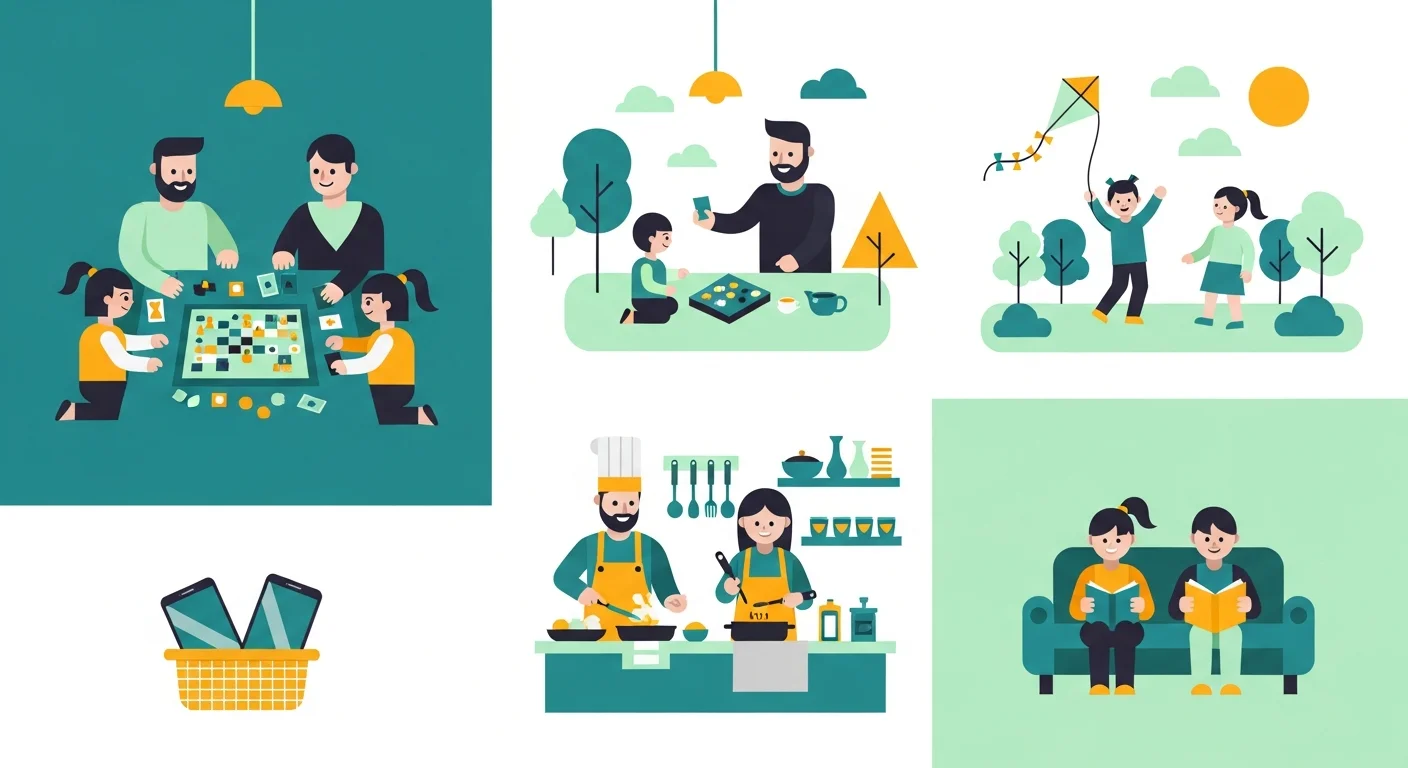
Last Tuesday evening, something unusual happened in my living room. My phone sat abandoned on the kitchen counter. The TV stayed dark. My kids weren't begging for tablets. Instead, we were sprawled across the floor building an absolutely ridiculous blanket fort, laughing until our stomachs hurt, completely absorbed in the moment. No notifications interrupted us. No screens mediated our connection. Just pure, unfiltered family time that felt almost revolutionary in its simplicity. And here's the kicker: nobody complained about being bored, nobody asked for devices, and the next morning my daughter actually requested we do it again.
I'm not going to pretend we've banished screens from our household forever or that every evening looks like a Norman Rockwell painting. But discovering genuinely engaging screen time alternatives that work for the whole family has transformed how we spend our time together, and honestly, the difference in our family bonding feels palpable. The key isn't eliminating technology through sheer willpower or guilt-tripping everyone into compliance. It's finding screen-free fun that's actually more compelling than whatever's happening on those glowing rectangles. And trust me, once you crack the code on what genuinely engages your particular family, the screens naturally fade into the background without the constant battles you might be dreading.
What Are Fun Non-Screen Activities for Family Bonding?
The secret to successful fun family activities without screens lies in choosing things that create shared experiences rather than passive consumption. After years of trial and error, I've learned that the best activities involve some combination of movement, creativity, mild challenge, and opportunities for genuine conversation and laughter. Kitchen experiments work surprisingly well because everyone can participate regardless of age or skill level. Making homemade pizza where each person designs their own quarter turns dinner prep into entertainment. Building competitions using whatever materials you have around, cardboard boxes, craft supplies, old magazines, create surprisingly intense and hilarious family challenges that reveal everyone's personality in unexpected ways.
Story creation games tap into natural creativity without requiring special equipment or preparation. Start with "Once upon a time, there was a..." and take turns adding one sentence each to build an absurd collaborative narrative that usually dissolves into giggles within minutes. Nature scavenger hunts transform ordinary walks into adventures, especially when you make the list weird and specific: find something perfectly round, locate evidence of an animal, discover the smoothest rock you can. Music jam sessions work even if nobody plays instruments properly because the point is noise-making together, not performance. Hand out pots, wooden spoons, kazoos, whatever makes sound, and create the world's worst band. The lack of actual musical talent somehow makes it more fun.
Memory jar projects create ongoing family engagement where everyone contributes notes about favorite moments, funny quotes, or things they're grateful for throughout the week, then you read them together during weekend breakfast. The accumulation of small moments documented this way becomes surprisingly meaningful over time. Dance parties need no explanation beyond cranking music and moving however your body wants to move, judgment-free zone. The sillier and more uninhibited, the better. These activities share common elements: low barrier to entry, high potential for laughter, opportunities for individual expression within group participation, and creation of shared memories that screens simply cannot replicate.
How Can Families Replace Device Time with Creative Hobbies?
Replacing tablets with family crafts succeeds when you pick projects that produce tangible results everyone can feel proud of and when you emphasize process over perfection. Painting rocks for the garden, building birdhouses even if they're architecturally questionable, creating friendship bracelets, designing greeting cards, these activities engage hands and minds simultaneously while creating conversation space that screens eliminate. The key is making supplies easily accessible rather than locked away in some craft closet requiring parental supervision to access. Set up a permanent craft station with basics like paper, markers, glue, scissors, random recycled materials, and watch how often kids gravitate toward it when screens aren't the default option.
Creative Hobby Ideas by Age and Interest:
| Activity Type | Ages 3-7 | Ages 8-12 | Teens & Adults | Time Needed |
|---|---|---|---|---|
| Hands-on Crafts | Playdough sculpting | Origami animals | Jewelry making | 30-60 min |
| Building Projects | Block towers | Model kits | Furniture repair | 1-2 hours |
| Artistic Expression | Finger painting | Comic creation | Photography walks | 45-90 min |
| Cooking Together | Decorated cookies | Homemade pasta | International cuisine | 1-2 hours |
| Outdoor Creation | Fairy gardens | Garden plots | Landscape design | Ongoing project |
Garden projects deserve special mention because they unfold over weeks and months, providing ongoing engagement that screens can't match. Even apartment dwellers can grow herbs on windowsills or maintain small container gardens. The daily ritual of checking plant progress, watering, observing changes creates routine touchpoints for connection. Woodworking projects scaled to skill level teach patience and problem-solving while producing functional objects. Kids can start with simple sanding and painting while adults handle cutting and assembly. Photography challenges where everyone documents the same theme (shadows, colors, textures) using phones or cheap cameras then shares and discusses results combines mild tech use with creative expression and conversation.
Are There Engaging Screen-Free Games for Kids and Parents?
Board games to boost family interaction have evolved far beyond Monopoly marathons that end in tears and flipped tables. Modern board game design offers sophisticated, engaging experiences that adults genuinely enjoy while remaining accessible to kids. Cooperative games where everyone works together against the game itself rather than competing eliminate the sore loser problem while building teamwork skills. Forbidden Island, Pandemic (maybe skip this one if pandemic fatigue is real), and Outfoxed create shared challenges that get everyone strategizing together. Strategy games like Ticket to Ride, Carcassonne, and Splendor provide genuine mental engagement without overwhelming complexity.
Card games extend beyond traditional options into creative territory. Storytelling card games like Dixit or Once Upon a Time spark imagination and conversation. Quick party games like Sushi Go, Exploding Kittens, or Taco Cat Goat Cheese Pizza deliver fast-paced fun in 15-minute bursts perfect for younger attention spans. Physical games bring movement into the mix: charades never gets old when you pick ridiculous categories, Twister creates hilarious body contortion scenarios, balloon keep-up challenges where you can't let the balloon touch the ground for as long as possible gets everyone moving.
Non-digital games for children naturally evolve with age but share core elements of clear rules, achievable challenges, and opportunities for both skill and chance to matter. Classic playground games transported indoors work surprisingly well: hide and seek in the dark with flashlights, indoor obstacle courses using furniture and pillows, treasure hunts with progressively difficult clues leading to small prizes. The investment in quality board games pays dividends over years of repeated play, unlike app purchases that lose appeal within weeks.
What Outdoor Alternatives Build Family Connections Without Tech?
Outdoor adventures for less screen time don't require elaborate planning or expensive equipment to create meaningful connection. Simple nature walks where everyone looks for specific things, animal tracks, interesting leaves, bird sounds, transform ordinary routes into exploration. Neighborhood bike rides establish regular rituals that provide exercise, conversation opportunities during breaks, and shared experiences. Park days with frisbees, soccer balls, or just permission to climb trees and get dirty create unstructured play space increasingly rare in scheduled childhood.
Geocaching introduces mild treasure hunting adventure using GPS coordinates to locate hidden containers others have placed. It combines technology minimally with outdoor exploration and problem-solving. Outdoor art projects like sidewalk chalk murals, stick sculptures, or nature collages use the environment as both medium and canvas. Backyard camping even if you're just sleeping under stars in sleeping bags for a few hours before retreating inside delivers novelty and adventure without travel logistics. Star gazing using simple constellation apps sparingly or just lying on blankets identifying patterns creates peaceful connection time.
Water activities in any form, sprinklers, water balloons, creek wading, beach visits, deliver guaranteed engagement across ages. Something about water play unlocks pure joy and presence. Volunteer activities like trail cleanup, community garden participation, or neighborhood beautification projects teach values while providing purposeful outdoor time together. The goal with outdoor alternatives isn't forcing reluctant kids outside through shame or restriction but discovering which outdoor activities genuinely engage your family's interests and building routines around those discoveries.
How to Create a Balanced Routine with Less Screen Use at Home?
Establishing device-free routines requires structure without feeling oppressive, and honestly, consistency matters more than perfection. Screen-free evenings for better bonding work best when you designate specific times rather than vague intentions. In our house, weeknight screens go off at 6 PM, creating a three-hour window before bed for meals, activities, and connection. This boundary took about two weeks to normalize, with initial resistance giving way to acceptance once everyone adjusted expectations. The replacement activities matter enormously because empty time without alternatives just creates frustration and conflict.
Healthy habits to cut device dependency develop through gradual replacement rather than sudden elimination. Start with one screen-free meal daily where phones stay in another room and conversation fills the space. Add device-free mornings on weekends, protecting those first couple hours for slower connection before the day fragments into individual activities. Create screen-free zones in bedrooms and dining areas, establishing physical spaces associated with presence and connection rather than digital consumption. Implement tech baskets where everyone deposits devices during designated family times, removing the temptation of nearby screens calling for attention.
Ritual building transforms screen time reduction from restriction into anticipated routine. Friday night game tournaments, Sunday morning pancake cooking sessions, weeknight walk-after-dinner traditions, these regular touchpoints create structure that screens used to fill. The key is finding rhythms that match your family's energy and interests rather than forcing activities nobody actually enjoys. Pay attention to what generates genuine engagement and double down on those discoveries while letting unsuccessful experiments fade away without judgment.
Rediscovering What Screens Replaced
Finding creative screen time alternatives isn't about returning to some idealized pre-digital past or declaring technology evil. It's about reclaiming balance and recognizing that the things screens replaced, conversation, physical play, creative expression, unstructured time, these weren't just quaint traditions. They're fundamental human needs that shape healthy development and meaningful connection. The most successful screen-free activities don't compete with digital entertainment through forced enthusiasm or parental willpower. They succeed by offering something screens genuinely cannot: authentic presence, tactile experiences, spontaneous laughter, and the kind of memories that linger long after the moment passes.
What's one screen-free activity your family could try this week? Pick something small, commit to trying it without judgment, and notice what shifts when you create space for connection beyond screens.