Here's the twisted logic we've all somehow accepted: admitting you're dependent on your phone feels more embarrassing than actually being dependent on your phone. You'll scroll for six hours straight, experience genuine panic when your battery dies, and choose notifications over conversations with living humans, but suggesting you might have a problem? That's when the defensiveness kicks in, the rationalizations start flowing, and suddenly everyone becomes an expert on why their particular phone use is totally different from those really addicted people. The Phone Overuse stigma exists in this bizarre space where we collectively acknowledge the problem while individually denying its relevance to our own lives, creating a culture where seeking help feels shameful and admitting struggle feels like confessing weakness rather than recognizing a widespread behavioral issue affecting billions of people worldwide. Breaking Phone Overuse stigma isn't just about making people feel better; it's about removing the psychological barriers preventing individuals from addressing a genuine addiction that's measurably destroying their mental health, relationships, and quality of life.
Why Is Smartphone Dependency Still Viewed With Shame?
The Smartphone Dependency shame persists partly because we've normalized the very behavior that constitutes the addiction, creating cognitive dissonance where you're simultaneously expected to be constantly connected yet somehow maintain perfect control over your usage. Why phone dependency faces unnecessary shame involves several overlapping cultural narratives that paint compulsive phone use as a personal failure rather than a predictable response to technology specifically engineered to be addictive. We've inherited outdated frameworks viewing all addiction through moral weakness lenses instead of understanding the neurological and behavioral mechanisms actually driving compulsive behavior. Society tells us that strong-willed, disciplined people control their phone use while weak, undisciplined people become addicted, ignoring the reality that these devices are designed by teams of behavioral psychologists specifically to bypass willpower and hijack brain reward systems regardless of your character or intelligence.
The stigma also persists because Phone Overuse doesn't fit traditional addiction stereotypes, making it easier to dismiss or minimize. Nobody's losing their job, ending up homeless, or dying from smartphone overuse in obvious dramatic ways that characterize substance addiction, so the harm feels less legitimate even though the psychological damage, relationship destruction, and quality of life degradation are very real and measurable. Digital addiction judgment comes from this perception that Phone Overuse is a "soft" addiction, not serious enough to warrant the same compassion or intervention we'd extend to someone struggling with alcohol or drugs. The irony is that Phone Overuse affects exponentially more people than most substance addictions, yet receives a fraction of the understanding or support because we've collectively decided that struggling with something everyone uses daily is somehow more shameful than struggling with something obviously dangerous.
How Does Societal Judgment Hinder Recovery From Screen Overuse?
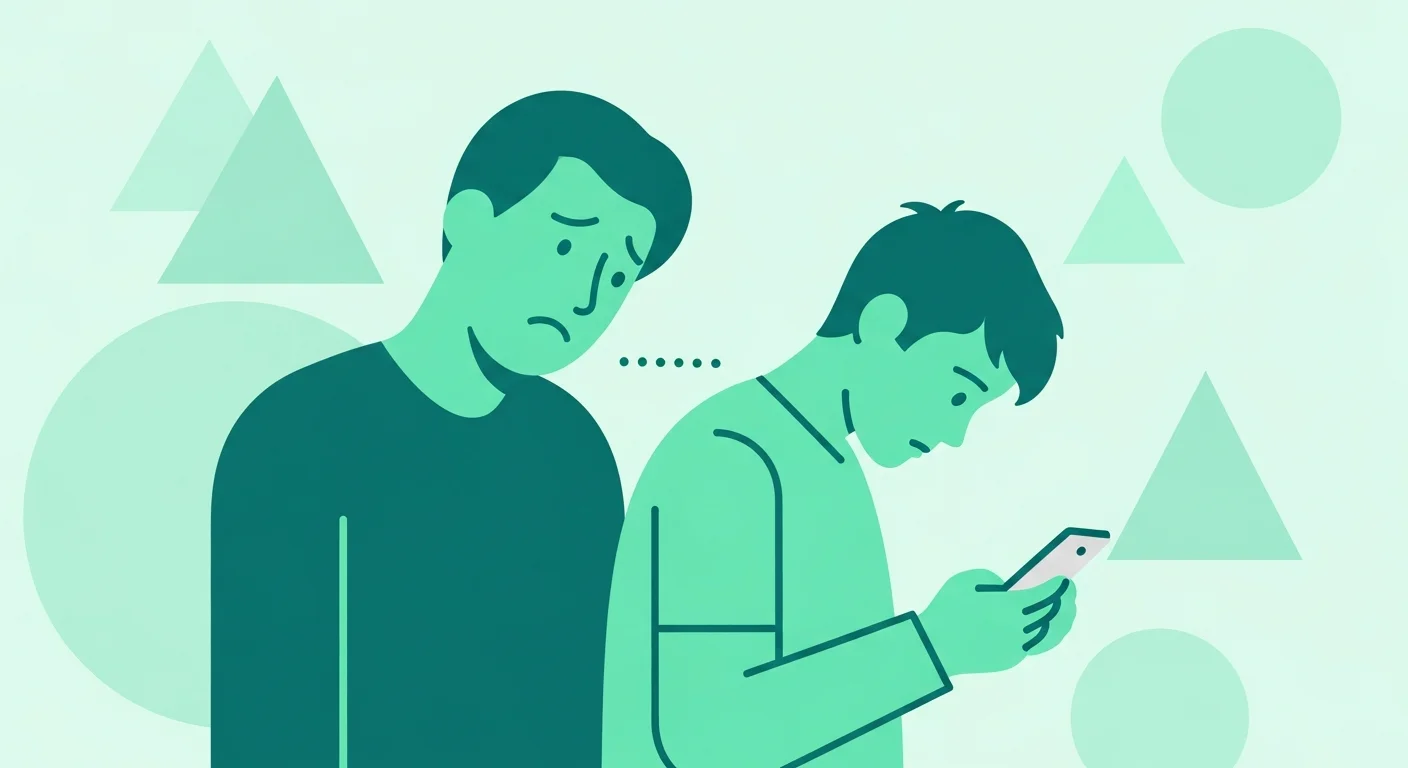
Societal judgment creates multiple barriers that actively prevent people from seeking help or making changes to address their Screen Dependency stigma. How stigma prevents people from seeking phone help starts with the simple fact that you can't address a problem you're too ashamed to admit exists. When admitting you check your phone 300 times daily feels more humiliating than actually checking your phone 300 times daily, you stay trapped in denial rather than moving toward solutions. The fear of being perceived as weak, lacking self-control, or being "that person" who needs therapy for something as supposedly trivial as phone use keeps millions of people suffering in silence rather than reaching out for support that could genuinely help them reclaim their attention and lives.
Mobile dependency stigma also manifests through minimization and mockery that makes vulnerability feel impossible. Try telling someone you're struggling with Phone Overuse and watch how quickly they deflect with jokes, comparisons to their own use, or suggestions that you're being dramatic about a non-issue. This response, however well-intentioned, communicates that your struggle isn't legitimate or worthy of serious attention, driving you back into isolation with your addiction rather than toward community and solutions. Overcoming societal stigma of Smartphone Dependency requires recognizing that the judgment itself is a defense mechanism; people minimize your struggle because acknowledging it as real forces them to examine their own potentially problematic relationships with their devices, which feels uncomfortable and threatening to their self-image as someone in control of their technology use.
What Myths Fuel the Stigma Around Mobile Addiction?
Several persistent myths perpetuate tech overuse stigma and prevent productive conversations about digital dependency. The biggest myth is that Phone Overuse is simply a matter of willpower, that anyone sufficiently motivated could just put their phone down and focus on real life. This completely ignores how behavioral addictions work neurologically and the sophisticated engineering specifically designed to make voluntary cessation extremely difficult for the average person. Myths and facts about Screen Dependency stigma need serious recalibration: the fact is that when technology companies employ behavioral psychologists to make their products maximally addictive, struggling to resist isn't a character flaw but a predictable outcome of deliberate design choices prioritizing engagement over user wellbeing.
Another destructive myth suggests that only teenagers or young adults struggle with Phone Overuse, creating shame for adults who recognize their own problematic patterns but feel they should somehow be immune to behavioral addiction because of their age or life experience. The reality is that smartphone dependency affects every demographic, every age group, every education level, and every economic bracket without discrimination. Personal stories challenging Phone Overuse stigma consistently reveal that the people struggling include doctors, lawyers, teachers, parents, executives, and every other category of responsible adult you can imagine, demonstrating that this isn't about individual weakness but about universal human vulnerability to carefully crafted addictive stimuli. The myth that "real" addictions involve substances while behavioral addictions are less serious also fuels stigma, despite brain imaging showing remarkably similar neural patterns between substance addiction and compulsive phone use.
How Can We Reduce Embarrassment Tied to Phone Habits?
Reducing judgment around mobile overuse recovery starts with reframing the conversation from moral failure to public health crisis. Strategies to destigmatize digital dependency issues involve openly discussing the addiction's prevalence, the intentional design choices making phones addictive, and the legitimate neurological mechanisms driving compulsive use regardless of intelligence or willpower. When we normalize the struggle by acknowledging how widespread it is, individual shame decreases because people realize they're not uniquely weak or broken but part of a much larger pattern affecting billions of people who've adopted technology faster than we've developed healthy relationships with it.
We can also reduce embarrassment by separating the behavior from the person's worth or character. Having Phone Overuse doesn't make you lazy, weak, or morally inferior; it makes you human in an age of unprecedentedly addictive technology. Breaking Phone Overuse stigma requires the same compassion shift that's gradually happening around mental health and substance addiction, recognizing that struggling doesn't indicate deficiency but rather normal human responses to abnormal circumstances. Creating spaces where people can discuss their phone use honestly without fear of judgment or mockery provides the safety necessary for vulnerability and change. Support groups, whether in-person or online, offer communities of people who understand the specific challenges of Phone Overuse and provide accountability without shame, validation without enabling, and hope that recovery is possible even when you've tried and failed repeatedly on your own.
Why Do People Hide Their Struggles With Digital Dependency?
People hide their nomophobia stigma struggles for the same reasons they hide any addiction: shame, fear of judgment, concern about being perceived as weak or out of control, and the belief that they should be able to fix this themselves without external help or support. The hiding itself becomes part of the addiction cycle, where the energy spent maintaining the illusion that everything's fine could be redirected toward actually addressing the problem if stigma didn't make honesty feel so risky. Digital dependency often stays hidden because it's socially acceptable to use phones constantly, meaning your addiction camouflages within normal behavior until the consequences become undeniable, and even then, most people rationalize rather than seeking help because admitting the extent of the problem feels too vulnerable and exposing.
The professional and social consequences also keep people hiding their struggles. Admitting Phone Overuse at work might be perceived as lack of focus or professionalism. Acknowledging it to friends might invite unwanted scrutiny or lectures. Discussing it with family might confirm their worst suspicions about your parenting or partnership. So people suffer silently, checking their screen time stats in horror but telling no one, trying repeatedly to cut back on their own but failing without support, and feeling increasingly isolated and ashamed as the addiction progresses despite their best efforts to control it. Why do people hide their struggles with digital dependency? Because we've created a culture that simultaneously normalizes constant phone use while stigmatizing inability to moderate that use, trapping people in an impossible bind where the addiction is both everywhere and nowhere, acknowledged and denied, serious and trivial depending on whose behavior we're discussing.
Addressing the stigma of Phone Overuse requires honest collective acknowledgment that this is a widespread problem affecting real people in real ways that deserve compassion rather than judgment. Phone Overuse isn't a moral failing requiring shame but a behavioral pattern requiring intervention, support, and the same understanding we're learning to extend toward other forms of addiction and mental health struggles. The technology isn't going anywhere, which means learning to talk about its negative impacts without stigma becomes essential for helping the millions of people currently suffering in silence because admitting struggle feels more frightening than continuing to scroll their lives away. Breaking the stigma doesn't mean excusing the behavior or enabling continued addiction; it means creating conditions where people feel safe enough to seek help before the consequences become catastrophic and irreversible.
If you're struggling with Phone Overuse, you're not alone, you're not weak, and you don't have to fix this in silence. Reach out. Start the conversation. Challenge the stigma by refusing to let shame keep you trapped.