You know that feeling when you pick up your phone to check the time and suddenly fifteen minutes have vanished into the void of Instagram reels? Yeah. We've all been there, stuck in that scroll hole wondering where our life went.
I'll be brutally honest with you. Last Tuesday, I realized I'd checked my phone before my feet even hit the floor. Before coffee. Before acknowledging my own existence, really. That was my wake-up call, the moment I knew something had to change. And if you're reading this, chances are you've had a similar moment where you thought, "This is getting out of hand."
Here's the thing about Phone Overuse: it doesn't announce itself with fanfare. It creeps up gradually, disguised as staying connected, being productive, or just "killing time." But one day you wake up and realize your phone controls more of your decisions than you do. The average person checks their device 96 times daily. That's once every ten minutes during waking hours. Wild, right?
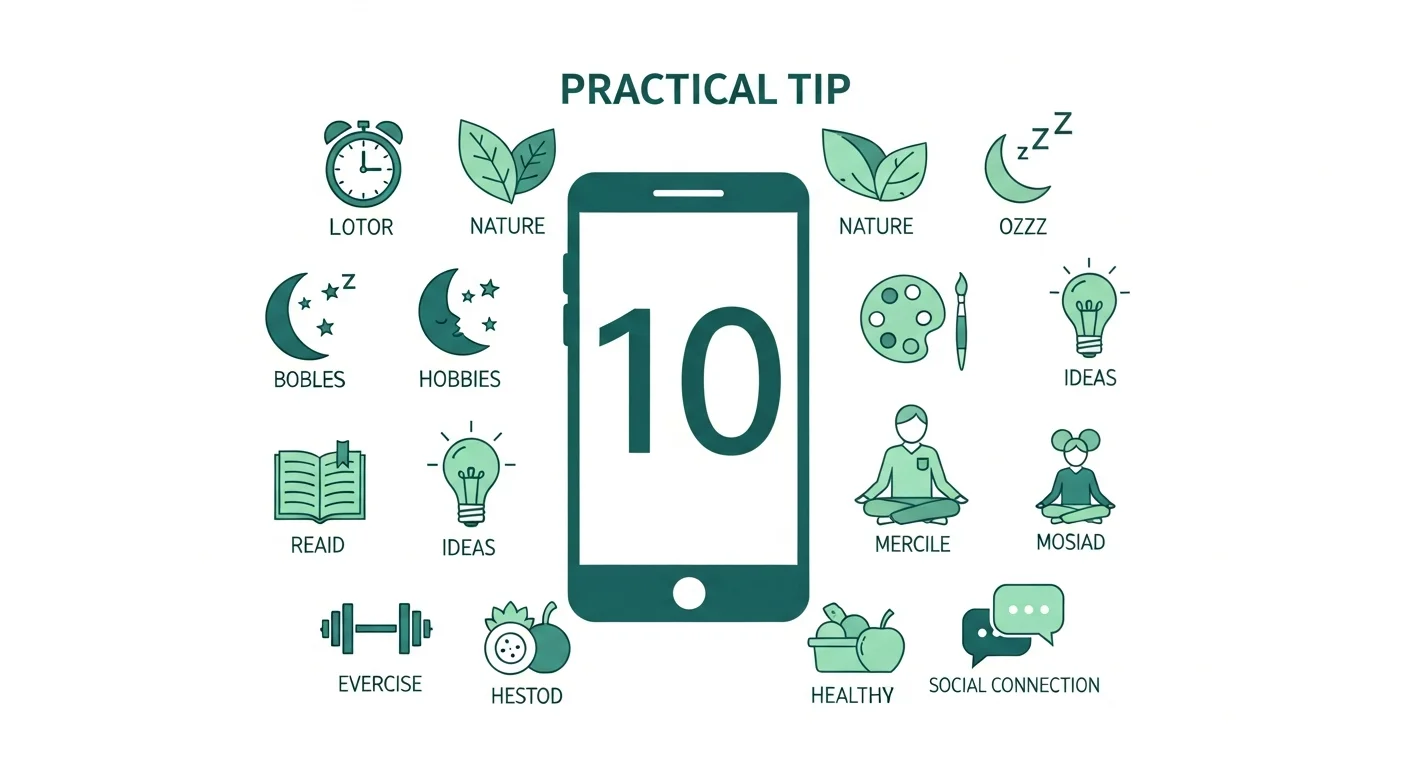
But here's what I've learned through my own struggles and talking to countless people fighting the same battle: you absolutely can overcome Phone Overuse, and you don't need to throw your device into the ocean or move to a monastery to do it. You just need the right strategies, a bit of self-awareness, and honestly, some patience with yourself. So let's dive into ten practical tips for stopping Phone Overuse that you can start implementing right now, today, this very moment.
1. Create a Morning Barrier Between You and Your Phone
How can I stop reaching for my phone first thing in the morning? This question hits different because morning phone checking sets the tone for your entire day. When your first conscious act is scrolling through notifications, you're essentially telling your brain that other people's content matters more than your own thoughts and priorities.
Here's what worked for me: I bought an actual alarm clock. Revolutionary concept, I know. Cost me twelve bucks, and suddenly my phone had no business being on my nightstand anymore. Now my device charges in the bathroom, which means I have to physically get out of bed and walk past it to start my day. By the time I'm vertical and moving, I've already broken that automatic reach-for-phone reflex. Try placing your phone somewhere that requires effort to access. Your kitchen counter. A drawer in another room. Anywhere that creates friction between waking up and screen time.
The first few mornings feel weird, like you're missing a limb. Your hand reaches for empty space and finds nothing. But stick with it for a week, and you'll notice something remarkable: mornings become yours again. You have actual thoughts before the world's chaos floods your brain. You might even enjoy your coffee while it's still hot instead of letting it go cold while you doomscroll through news you can't control anyway.
2. Master Your Phone Settings to Reduce Addictive Triggers
What role do phone settings play in reducing addictive behavior? Massive. Your phone is literally engineered to keep you hooked, but you can hack those same features to work in your favor. Start with grayscale mode. Every smartphone has this accessibility feature, and it's shockingly effective. Those bright reds and blues and yellows that make apps so appealing? Gone. Your phone becomes visually boring, removing a huge chunk of the dopamine hit you get from using it.
Next up: notification management. This is where most people mess up because they think they need every notification. You don't. Go through your apps one by one and ask yourself, "Does this actually require immediate attention?" News apps? Absolutely not. Social media? Definitely not. Shopping apps sending you sale alerts? Please. Turn off everything except calls, texts from actual humans you know, and maybe work-related stuff if your job demands it. I went from 200+ daily notifications to about eight, and the difference in mental clarity was immediate and profound.
3. Implement App Timers and Daily Screen Time Limits
Here's a truth bomb: you probably have no idea how much time you actually spend on specific apps. I certainly didn't until I checked my screen time report and discovered I was spending ninety minutes daily on Twitter. Ninety minutes. That's a full movie. That's a solid workout. That's time I'll never get back, wasted on strangers arguing about things that don't matter.
Use your phone's built-in screen time features or download apps like Freedom or Forest. Set strict limits for your worst offenders. When Instagram cuts you off after thirty minutes, you're forced to confront your behavior instead of mindlessly continuing. Yes, you can override these limits. But having to consciously choose to break your own rules creates a moment of awareness that's surprisingly powerful. Most of the time, that pause is enough to make you close the app and do literally anything else.
4. Designate Genuine Phone-Free Zones
What practical methods work best for limiting social media usage on smartphones? Physical boundaries work better than willpower alone. I've created three non-negotiable phone-free zones in my life: the bedroom after 9 PM, the dinner table, and the bathroom. These spaces are sacred now, reserved for actual human activities like sleeping, eating with presence, and, well, bathroom stuff that doesn't need documentation.
The dinner table rule changed my relationships more than I expected. When you're eating with someone and phones are banned, you're forced to have actual conversations. Remember those? Turns out people are pretty interesting when you're not both staring at screens. My partner and I rediscovered we actually enjoy each other's company. Novel concept.
5. Replace Phone Time With Tangible Activities
What alternative activities help replace excessive phone usage? You can't just remove phone time and leave a void. Nature abhors a vacuum, and so does your brain. You need replacement behaviors, things that are genuinely engaging and, ideally, incompatible with phone use. I picked up guitar again after a ten-year hiatus. Can't scroll Twitter when you're holding a guitar. Physics won't allow it.
Other people I know have found success with cooking elaborate meals, working out, reading physical books, doing puzzles, or taking up crafts like knitting or woodworking. The key is finding something that requires both hands and genuine attention. Bonus points if it produces something tangible at the end, giving you that sense of accomplishment your brain craves but can't get from scrolling.
6. Practice the Five-Minute Delay Rule
Are there specific techniques to resist the urge to check your phone constantly? The five-minute rule is stupidly simple but weirdly effective. When you feel that familiar itch to check your phone, wait five minutes. Just five. Set a timer if you need to. Most of the time, the urge passes completely before the timer goes off. Your brain realizes it doesn't actually need whatever it thought it needed.
This technique works because phone checking is often habitual rather than purposeful. You're not checking because you need information. You're checking because your hands are idle and your brain wants stimulation. Creating that five-minute buffer interrupts the automatic behavior loop, giving your conscious mind a chance to intervene. When the timer goes off and you still feel you need to check, go ahead. But you'll be surprised how often you forget why you wanted to check in the first place.
7. Use Physical Friction to Your Advantage
Make accessing your phone slightly inconvenient. Put it in a drawer when you're working. Leave it in another room when you're watching TV. Keep it in your bag instead of your pocket when you're out. These tiny barriers create just enough friction to break the automatic reaching behavior. It sounds almost too simple, but convenience is the enemy of habit change. When checking your phone requires actual effort instead of being instant and effortless, you do it way less.
8. Build an Accountability System
How can I stay accountable when trying to reduce my phone dependency? Going solo makes everything harder. Tell someone you trust about your goals and ask them to call you out when you're on your phone unnecessarily. My best friend and I have a deal: if either of us pulls out our phone during hangouts without good reason, the other person can literally take it and hold it hostage until we're done spending time together. Sounds extreme, but it works because neither of us wants to be that person who values their phone over the friendship.
You can also use apps that let you compete with friends on who can maintain the longest phone-free streaks. Gamifying the process taps into that competitive spirit that probably got you dependent on phone games in the first place. Fight fire with fire, you know?
9. Reframe Your Relationship With FOMO
Let's address the elephant in the room: fear of missing out is real and it's powerful. But here's a perspective shift that helped me enormously. By being glued to your phone, you're missing out on actual life happening right in front of you. You're missing the sunset while photographing it for Instagram. You're missing your kid's joke while checking work emails. You're missing the present moment, which is literally the only moment you ever actually have.
How do you handle Phone Overuse when you need your device for work? This is tricky but not impossible. Separate work and personal use as much as possible. If you can, have different devices or at least different profiles. Use website blockers during work hours to prevent social media access. And be honest with yourself about what "needing your phone for work" really means versus what's just an excuse to stay connected.
10. Set Realistic Goals and Celebrate Progress
How long does it take to break a Phone Overuse habit successfully? Research suggests it takes anywhere from 21 to 66 days to form a new habit, but honestly, the timeline matters less than consistency. Don't aim for perfection. Aim for progress. If you typically spend six hours daily on your phone and you get that down to four hours in the first week, that's a genuine victory worth celebrating.
| Week | Realistic Goal | What Success Looks Like |
|---|---|---|
| Week 1 | Reduce screen time by 20% | Awareness of usage patterns, minor reductions |
| Week 2-3 | Establish 2-3 phone-free zones | Consistent boundaries in specific areas |
| Week 4-6 | Cut recreational use in half | Noticeable behavior changes, better focus |
| Week 7+ | Maintain healthy phone relationship | Sustainable habits, occasional slip-ups okay |
Track your progress but don't obsess over it. Use your phone's screen time reports to see trends over weeks and months rather than getting discouraged by individual bad days. Because you will have bad days. Days where you slip back into old patterns. That's not failure. That's being human. What matters is getting back on track the next day instead of giving up entirely.
Conclusion
Overcoming Phone Overuse isn't about achieving some impossible perfect balance where you become a digital monk who only uses technology for pure, productive purposes. That's not realistic in our modern world, and honestly, it's not necessary. The goal is simply to control your phone usage instead of letting it control you, to be intentional about when and how you use your device rather than operating on autopilot.
These ten tips for stopping Phone Overuse work because they address both the psychological and practical aspects of the problem. They create friction where you need it, remove temptation where possible, and replace unhealthy habits with better alternatives. Start with one or two strategies that resonate most with you. Master those before adding more. This is a marathon, not a sprint, and sustainable change happens gradually.
I won't lie and say it's easy. Breaking any addiction requires effort, self-awareness, and patience with yourself when you inevitably mess up. But every hour you reclaim from mindless scrolling is an hour you get to spend actually living your life. And that's worth fighting for.
Ready to assess your smartphone dependency? Use our Digital Wellness Calculator to get your personalized screen time score and start your journey toward better digital wellness.
Note: This article is for informational purposes only and should not be considered medical advice. If you have serious concerns about technology addiction or mental health, please consult with a qualified healthcare provider.